










So you may have caught the drama on LinkedIn this week: a major customer relationship management (CRM) platform quietly announced it would start sharing customer data across accounts by default... and then walked the whole thing back a few days later once customers (very loudly, very publicly) said absolutely not.
Honestly? The specifics of that story matter way less than the question it dropped in everyone's lap: when you put your data into a CRM, who actually owns it?
CRM data ownership used to be one of those questions nobody bothered asking. Now teams everywhere are asking it out loud for the first time, and well, it shouldn’t be.
First, a quick distinction (because this phrase means two things)
When people talk about CRM data ownership, they sometimes mean the internal kind: which person on your team is responsible for keeping records clean, assigning owners to accounts, that whole data governance world. That's a real and worthy topic (and honestly, one for another post).
This is about the other kind. The bigger kind. Not who owns the data inside your company... but whether your data belongs to you or to your vendor. Because as it turns out, the answer isn't always what you'd assume.
Why understanding your CRM data ownership matters
Back in the day, a CRM was basically a fancy filing cabinet. You put contacts in, you got a pipeline view out, and nobody argued about ownership because there wasn't much worth arguing over.
That era is over.
Modern CRMs auto-fill your records with details pulled from all over the place, sync signals from the rest of your tech stack, and increasingly train AI features on the data sitting inside your account (which is genuinely great when it happens with your knowledge and your consent!).
But, it's a whole lot less great when it happens by default, buried in a settings toggle you didn't even know existed.
And here's the uncomfortable part the last few weeks made painfully clear: some vendors don't fully treat the customer data your team spent years importing, cleaning, and babysitting as yours. They treat it as a shared asset they can dip into to make their product better for everyone... including, awkwardly, your competitors.
What to actually check before you commit to a CRM
If you're shopping for a CRM right now (whether you're an eight-person agency or a growing financial services team), here are the questions worth asking a vendor directly:
1. Is data sharing opt-in or opt-out by default?
Opt-out means you're automatically enrolled unless you find and disable a setting. Opt-in means nothing happens with your data until you actively say yes. The difference sounds small. It isn't.
2. Is your CRM data ever used to enrich other customers' accounts?
Some platforms use "enrichment" data such as business contact details, employer information, and firmographic signals as a shared pool across their entire customer base.
Ask plainly: does the data I put into my account ever benefit someone else's account? (Then watch how long the answer takes.)
3. Can you export everything, cleanly, whenever you want?
Data portability is the other half of owning your data (you can't really own something you can't take with you). If the answer involves proprietary formats, support tickets, or "reach out to your account manager"... you already have your answer.
4. Does the vendor tell you before something changes, or after?
Trust isn't really tested in the fine print. It's tested in the moment a policy changes and you find out you were already opted in.
Where Copper stands
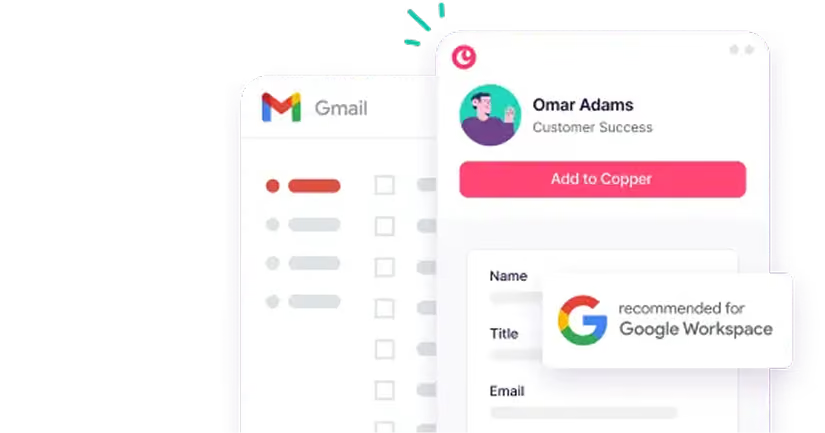
We built Copper CRM for teams that live in Google Workspace and want a CRM that fits how they already work — not one that makes them rearrange their whole workflow just to fit it.
And that philosophy doesn't stop at your inbox. It extends to your data, too.
Your contacts, notes, deals, and records are yours, full stop.
We don't share them across accounts, we don't use your data to fill in someone else's CRM, and we don't change how your data gets used without asking you first (it's just... how we think a CRM vendor should behave, period).
If your current CRM's answers to any of the questions above gave you a weird feeling in your stomach, trust that feeling.
And if you're an agency or a Google Workspace-native team weighing your options, we'd love to show you what a CRM built around real data ownership actually looks like in practice.