










When people first hear what we do at ZoomChef, they usually pause for a second. A private chef network… built specifically for professional athletes?
It’s not the most common business model, and honestly, when I started, I wasn’t sitting around thinking, “Let me build a niche company in an underserved corner of the food industry.” I wasn’t chasing a specific category. I was just following something personal.
I began cooking years ago at home, trying to help my mom while she worked full-time and went to school. Later, in 2016, I moved to Kansas City to help manage the diet of a professional athlete I’ve considered family since childhood. That experience showed me how powerful intentional eating could be, and not just for health, but for performance and recovery.
ZoomChef grew from that blueprint: connecting elite clients with chef partners who take the work seriously, and creating opportunity in a space most people overlook.
And as we’ve grown, I’ve learned that building something, especially something niche, takes more than passion. It takes trust, consistency, and the right systems behind the scenes to keep everything organized as the network expands.
So if you’re building a business in a niche industry (whether that’s something specific, misunderstood, or hyper-targeted) here are six things I’ve learned along the way (along with the tools I use!).
1. Your niche isn’t a limitation
When you tell people you’re building something niche, sometimes they’re impressed, and sometimes they hit you with, “Is that… big enough?”
I get it. Most business advice makes it sound like you need to serve everyone to succeed. But what I’ve learned is that focus is what creates momentum. ZoomChef works because we leaned into something very specific. Professional athletes don’t eat like the average person. Their schedules are different. Their bodies are their careers. The stakes are high, and the details matter.
Once you stop trying to appeal to everyone, you can start building something that feels undeniable to the right people. The niche isn’t what limits you. The niche is what gives you direction.
What you can take from this
If you’re building something specialized, here’s a practical way to sharpen your niche:
- Get clear on the “who” before the “what.”
- Name the specific moment you show up for.
- Market outcomes, not just features.
Ask yourself:
- Who do I serve best?
- What do they care about that most people miss?
- What do they need that a general business can’t deliver?
One exercise: We help ___ do ___ without ___. Clarity builds trust faster than anything.
2. Your best business idea is probably closer than you think
ZoomChef didn’t start with a big “startup moment.” It started with real life. I was cooking for someone whose performance depended on what was on the plate. Food wasn’t casual anymore. It was structured, intentional, and connected to real goals.
Once you experience something up close, you start noticing what’s missing and that’s usually where niche businesses are born. A lot of founders think they need to invent something brand new, but most of the time, the opportunity is already there. It’s in the gap you’ve personally seen.
What you can take from this
Here’s how to turn lived experience into a business direction:
- Look for patterns, not random ideas.
- Pay attention to what people already ask you for.
- Start small and specific instead of big and vague.
Ask yourself:
- What problem have I helped solve more than once?
- What do people already trust me with?
- What do I understand because I’ve lived close to it?
Action step: Write down one group of people you understand deeply, and one problem you could solve for them better than most.
3. In relationship-driven businesses, trust is the whole product
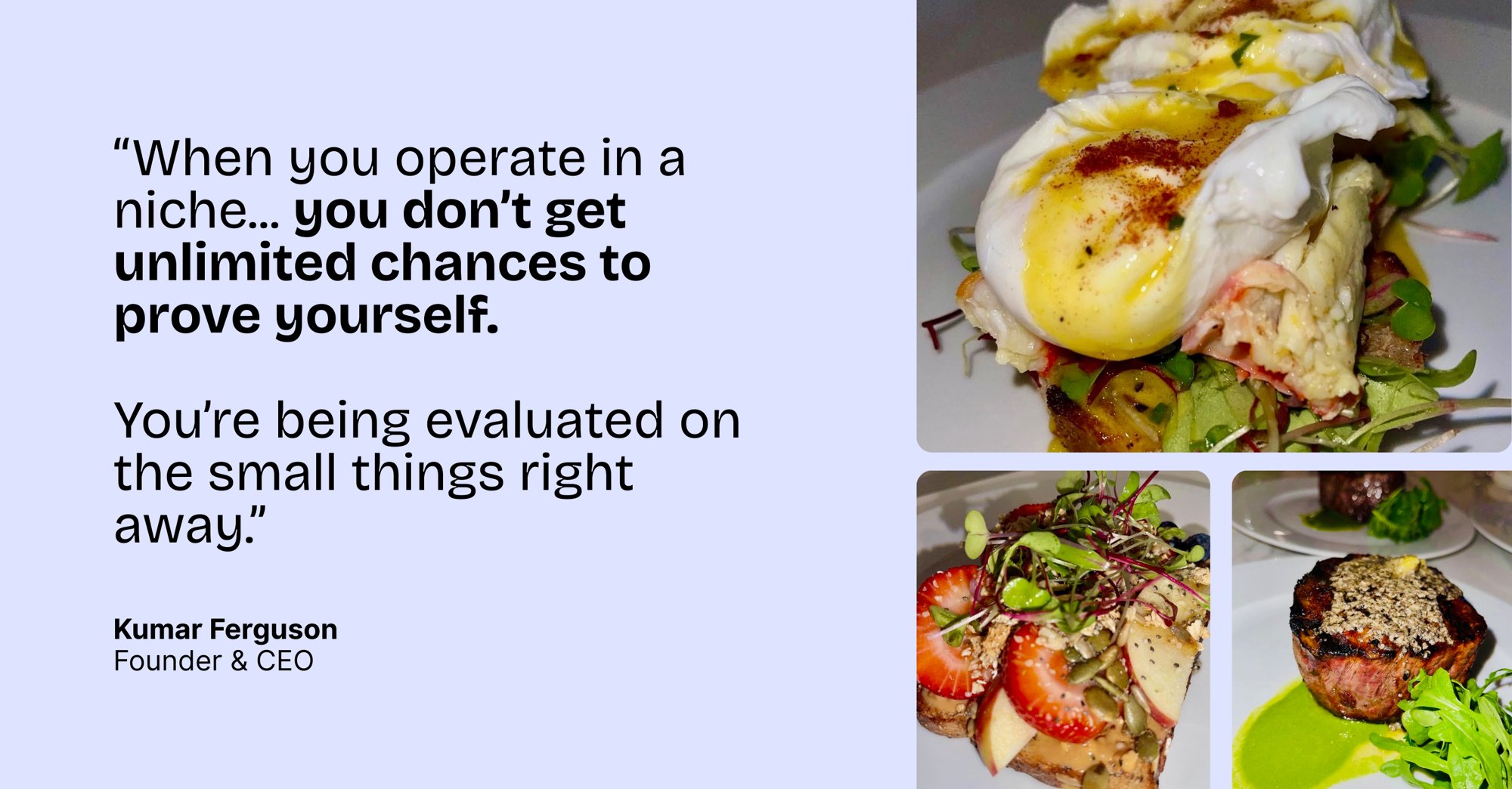
In our world, trust isn’t a bonus… it’s everything. We’re working with people whose privacy matters, whose time is protected, and whose circles are tight. When you operate in a niche like that, you don’t get unlimited chances to prove yourself. You’re being evaluated on the small things right away, like how you communicate, how you show up, and how seriously you take the environment you’re stepping into.
That’s why, for us, it’s never just about talent. A chef can be incredible in the kitchen, but if they’re unreliable, slow to respond, or casual about timing, it doesn’t work.
At this level, professionalism is part of the service.
But trust also shows up in what you’re willing to stand behind. For us, that includes the food itself. The ingredients matter, the standards matter. We don’t cut corners, because our clients are putting their performance, their recovery, and their health in our hands. That’s why we’re serious about quality, like organic ingredients, fresh sourcing, and no budging on what we believe is right.
People can feel that care, and it becomes part of the trust.
And even outside of sports, the same thing applies in so many other niche businesses. If you run an agency, trust shows up in whether you hit deadlines and whether your work feels thoughtful. If you’re a consultant, it’s whether people feel confident taking your advice. If you’re in ecommerce, it’s whether your product quality matches what you promise. In any relationship-driven business, customers aren’t only buying the service, they’re buying the experience of relying on you.
Trust is built through consistency, and it’s protected through standards.
What you can take from this
If trust is central in your niche, here are a few practical ways to protect it:
- Define what professionalism means in your business.
- Create consistency through the process.
- Partner and hire based on reliability, not just skill.
Ask yourself:
- What builds trust quickly in my niche?
- What breaks trust instantly?
- What do I want to be known for before I’m even in the room?
Try writing down 3 to 5 behaviors your business will always deliver. In niche industries, those details become your reputation.
4. Remind yourself your business model won’t click for everyone
One of the hardest parts of building something niche is that people don’t always understand it right away. Early on, I had plenty of moments where ZoomChef didn’t sound “real” to people. When you’re reaching out cold, especially in a tight industry, skepticism comes with the territory.
That stage can be frustrating, because you know what you’re building is valuable, but you don’t have years of proof behind you yet.
What changed everything for us wasn’t a perfect pitch. It was one client trusting us enough to bring in another chef partner under our support. That first real vote of confidence created momentum, and from there, results started speaking louder than explanations.
In niche businesses, credibility is built through outcomes. Once people see it working, the conversation changes.
What you can take from this
Instead of trying to convince everyone, focus on creating proof:
- Get one strong client win you can build from.
- Collect testimonials early, even if they’re simple.
- Let referrals and repeat business do the heavy lifting.
Ask yourself:
- What’s one result I can deliver that makes my business undeniable?
- Who is the first person that could become a long-term advocate?
Momentum comes from outcomes, not hype.
5. Scaling a niche business requires systems, not just hustle
Once you find traction, things move quickly. Today, ZoomChef operates nationwide. We manage thousands of chef partners, plus an internal team across operations, marketing, and support. I’m still involved day-to-day, making sure everything runs the way it needs to.
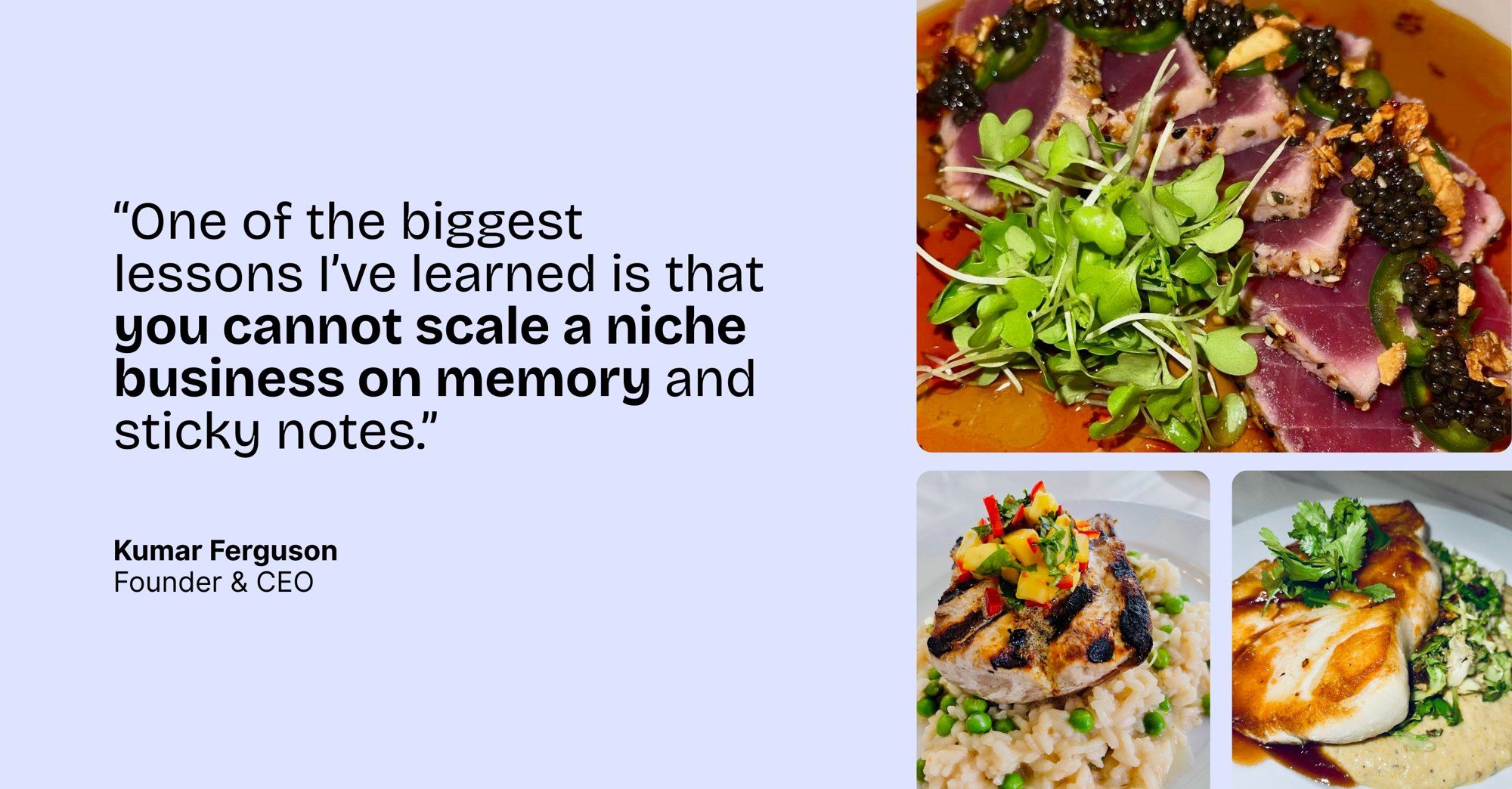
One of the biggest lessons I’ve learned is that you cannot scale a niche business on memory and sticky notes.
In the early days, conversations lived everywhere: Instagram DMs, texts, emails, spreadsheets. That works when your network is small, but once you grow, you need structure. Details matter too much. Follow-ups matter too much.
Instagram is still a powerful tool for storytelling and connection, and we rely on a structured intake process to match clients with the right chef.
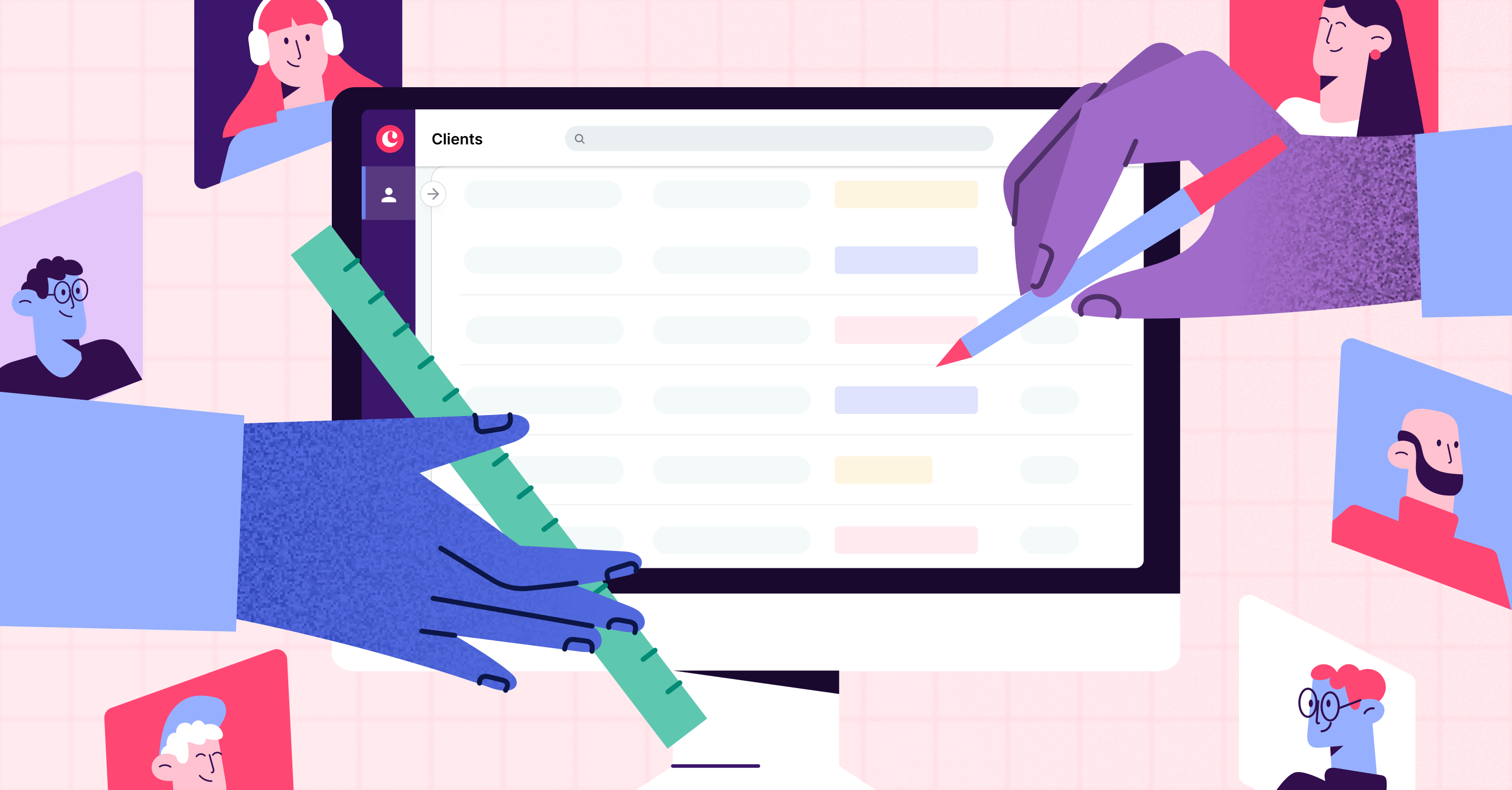
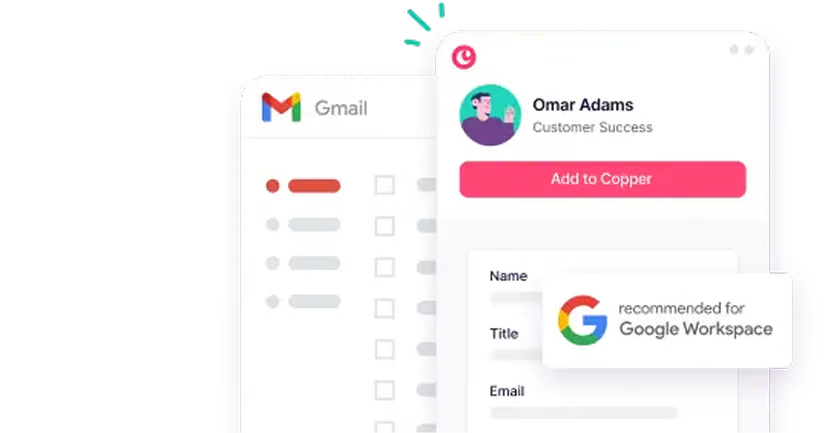
But when it comes to managing relationships at scale, Copper has been our saving grace. We use Copper to keep everything organized in one place — clients, chef partners, opportunities, and the conversations that connect them — so nothing slips through the cracks as the business grows.
What you can take from this
If you want to scale without losing what makes your business personal:
- Build systems early, before you feel overwhelmed.
- Centralize your relationships and follow-ups.
- Don’t let growth outpace organization.
Ask yourself:
- What would break first if my business doubled next month?
- What system would make that growth feel manageable?
Structure protects the niche you’ve worked hard to build.
6. Find the right balance for privacy and visibility
Content is one of the most powerful tools a business has today. Social media gives you a way to tell your story before anyone ever meets you. And with all the tools out there now — editing platforms, AI, everything — it’s easier than ever to create something that looks professional without needing a full production team.
For niche founders, that’s a huge opportunity. You can show people your standards, your values, and what makes you different. But in certain industries, there’s a balance. A lot of our clients value privacy.
We’ve had to learn how to share the ZoomChef story without turning relationships into content or crossing boundaries. For us, it comes down to sharing the process, not the person. We can show what intentional eating looks like, highlight professionalism, and communicate the environment we operate in without exposing anyone who doesn’t want to be exposed.
You don’t have to name-drop to prove you’re doing real work. You just have to communicate your standard clearly.
What you can take from this
If you’re building in a high-trust niche, ask yourself:
- How can I tell my story without oversharing?
- How can I market my process instead of private details?
- How can I build visibility while still protecting relationships?
The best content builds trust, not just attention.
Success in a niche is all about care
Building in a niche takes a different mindset. You’re not trying to be everything to everyone. You’re deciding, “This is who I’m here for,” and then you’re doing the work to show up at a high level for that group, over and over again.
That kind of growth isn’t always loud. It’s built through consistency, trust, and paying attention to the details that matter in your world. When you lean into what makes your business specific, you stop chasing and you start building something people can actually feel.
That’s what I’ve learned through ZoomChef. It isn’t just about meals — it’s about care, professionalism, and helping people perform at their best. And as we’ve grown, having the right systems in place has mattered just as much as the vision.
If you’re building a relationship-driven niche business and looking for a way to stay organized as you scale, Copper has been a huge help for us. It’s how we keep track of clients, chef partners, and opportunities without letting anything slip through the cracks.
If that sounds like something your business could use, it’s worth giving Copper a try (they have a free trial for 14 days free).
Because if you stay committed to serving well, and you have the tools to support that, the niche won’t limit you. It’ll be the thing that defines you.