












Rolling out a customer relationship management (CRM) sounds like a straightforward project until you’re three weeks in and someone asks, “Wait… are we putting leads in the pipeline or in the spreadsheet?” (Spoiler: they’re doing both!)
The truth is, a CRM doesn’t magically fix broken processes. It doesn’t clean your data. It doesn’t force your team to follow up. It doesn’t stop deals from slipping through the cracks just because it has a dashboard.
That’s what a CRM implementation plan is for.
A strong CRM implementation plan helps you roll out your system strategically, avoid messy adoption issues, and build workflows and automations your team members actually uses.
Because the goal isn’t “we implemented a CRM.” The goal is “we implemented a CRM and now our business runs better.”

How one change gave Moonstone Marketing 90k in pipeline clarity
What is a CRM Implementation?
A CRM implementation is the process of setting up and launching a customer relationship management system so it works for your actual business processes (and not just in a demo).
It includes the strategic work (like defining your sales process and KPIs) and the technical work (like migrating data, setting up permissions, and integrating tools).
Think of it this way: buying CRM software is like buying a kitchen and the CRM implementation process is organizing it, labeling everything, and teaching everyone in the house where things go so you don’t end up with ketchup in the silverware drawer.
Why you need a CRM implementation plan
Most CRM rollouts fail for the same predictable reasons: the team doesn’t fully adopt it, the data gets messy fast, and no one can agree on what “using the CRM correctly” even means.
Without a structured CRM implementation plan, things spiral quickly. Deal stages become a free-for-all. Contact records are missing key details. Reporting breaks (or worse… it becomes wildly inaccurate). And your reps start treating the CRM like homework a.k.a. something they do only when someone reminds them… three times.
But with a clear plan, everything clicks into place. Your team knows what the CRM is for, how to use it, and why it matters. Expectations are consistent, workflows make sense, and rollout doesn’t feel like a disruption, it feels like an upgrade.
CRM implementation roadmap: 10 essential steps
This is the heart of your CRM implementation plan: a practical roadmap that covers the full customer relationship management implementation journey from kickoff to optimization.
1. Define goals and KPIs
Before you build anything, define what success looks like. Otherwise, you’ll end up implementing features because they seem useful, not because they actually move the business forward.
Your goals should be tied to business outcomes. For example, you might want faster follow-ups, cleaner forecasting, higher close rates, or better retention tracking. Once those goals are clear, define KPIs so you can measure whether your CRM is delivering value.
Examples of useful CRM implementation KPIs include:
- Sales conversion rate improvement
- Lead response time reduction
- Pipeline velocity increase
- Forecast accuracy improvement
- Increase in logged activities per rep
This step is what makes your CRM implementation plan strategic instead of reactive.
2. Build a cross-functional team
A CRM rollout is never just a sales project. Marketing touches lead intake, customer success touches handoffs, operations touches reporting, and IT touches integrations and permissions. If you leave one of those groups out, you’ll build a system that only works for part of the business.
Your CRM implementation plan should include stakeholders from each department, with clear responsibilities assigned. You don’t need a 12-person committee, but you do need the right voices in the room early.
At minimum, you want:
- A project lead who owns timelines and decisions
- A sales representative who understands real pipeline behavior
- A marketing stakeholder who owns lead flow and attribution
- An operations or systems person who understands reporting needs
The right team prevents painful rework later.
3. Audit current processes and data
Before you migrate anything, you need to understand what you’re currently doing and what’s broken.
This step often reveals uncomfortable truths, like “half our leads never get followed up with” or “everyone defines ‘qualified’ differently.” That’s not bad news. That’s useful news. Because a CRM can’t fix process confusion unless you address it first.
In your audit, review how leads enter your business, how deals move through stages, how handoffs happen, and where data gets lost. Then review the quality of your existing customer data so you know what’s worth migrating.
During this phase, your CRM implementation plan should include documenting:
- Your current pipeline stages
- Common sales and customer workflows
- Lead sources and intake methods
- Existing tools used by each team
- Reporting requirements leadership expects
The goal is to build your CRM solution around reality, not wishful thinking.
4. Choose the right CRM for your strategy
Not all CRMs are created equal — and wow, does it show!
Some are built for massive enterprises and come with enough complexity to require a full-time admin (and maybe a support group). Others are so lightweight they barely do more than store names and email addresses, leaving you stuck without the automation and reporting your team actually needs.
The right CRM should feel like it fits your business. It should support the way your team already works.
When you’re evaluating new CRM system options, focus on the things that make or break adoption: ease of use, workflow flexibility, automation capabilities, and how well it integrates with your existing tools.
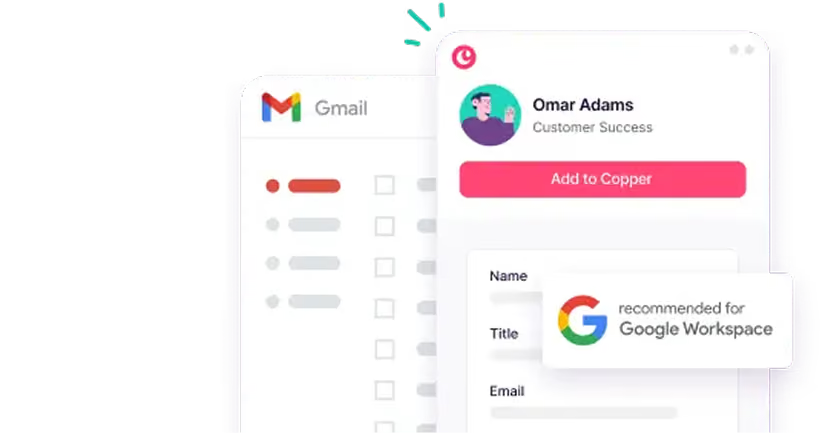
And if your team lives inside Google Workspace, that last part is especially important. Your CRM should work seamlessly with Gmail, Calendar, and Drive so your team isn’t constantly jumping between tabs or duplicating work.
That’s exactly why Copper is built for Google Workspace teams. Instead of feeling like “one more system” your team has to remember to update, Copper becomes part of the workflow they already use every day — which makes adoption smoother, faster, and way more realistic.
5. Map a CRM implementation project plan
Now it’s time to turn the strategy into a timeline. A CRM implementation plan should include a real project roadmap with phases, owners, and milestones.
This is where you prevent the classic scenario of “we’ll launch next month” turning into “we’re still testing it six months later.”
A strong project plan includes:
- Clear phases (planning, setup, migration, training sessions, launch)
- Deadlines tied to realistic workloads
- Task owners for each milestone
- Internal check-ins and review points
This keeps implementation moving and ensures accountability.
6. Clean and migrate data
CRM data migration is one of the most important steps in your CRM implementation plan (but also one of the most underestimated!).
Before you migrate a single record, pause and clean house.
This is your moment to delete the duplicates, fix inconsistent formatting, and decide what information actually matters.
Not every field needs to make the jump. And no, you probably don’t need to migrate every cold lead from 2014 “just in case.”
Dragging a decade of clutter into your new CRM only slows things down and overwhelms your team on day one.
Be intentional. Decide what’s essential (look at customer information, customer interactions, files, etc.), what’s nice-to-have, and what belongs in the archive.
Because here’s the truth: a clean dataset changes everything. It makes your CRM easier to navigate, easier to report on, and (most importantly) easier to trust.
7. Customize workflows and integrate tools
During this phase, you’ll set up your pipelines, stages, custom fields, task workflows, and user permissions. You’ll also connect the CRM to the tools your team already relies on so they aren’t duplicating work across platforms.
With Copper, this is where teams can take advantage of:
- Customizable Pipelines
- Pipeline email automations triggered by stage changes
- Website forms for sorting inquiries into the right pipeline
- Integrations with hundreds of other apps
- Seamless Google Workspace integration (Gmail, Calendar, Drive)
A strong CRM implementation plan focuses on streamlining how work happens and functionality, not adding extra steps. The more “automatic” the system feels, the more your team will use it without resistance.
8. Train users for adoption
Training isn’t a one-time “everyone hop on Zoom” moment. It’s the part of your rollout that makes the CRM actually stick.
Because most CRM resistance isn’t people being difficult — it’s people thinking, “Cool… so this is just extra work for me now?” Or worse, “Is this going to turn into a micromanagement tool?”
If you don’t address that early, adoption will fall off a cliff.
The best training is practical and role-based:
- Sales should practice moving deals, logging activity, and setting next steps.
- Marketing needs lead routing and attribution to make sense.
- Leadership needs dashboards that don’t require a decoder ring.
And please don’t just train once and disappear. Mix in quick walkthroughs, cheat sheets people can actually find later, and a little post-launch support. When users feel confident, they stop avoiding the CRM and start relying on it.
9. Launch in stages and test
Instead of rolling the CRM platform out to the entire company at once, start with a pilot group. Let them test the pipeline stages, validate workflows, and identify issues before the full launch. This creates a feedback loop that strengthens the system and builds internal champions.
A staged rollout is especially useful if your CRM implementation plan includes automation, integrations, or complex data migration. Testing in smaller waves reduces risk and improves adoption.
10. Optimize and iterate constantly
As your business needs change, your sales process will shift. Your team will grow. Your reporting questions will get more specific. And if your CRM stays frozen in its original setup, it’ll start feeling less like a helpful system and more like a cluttered junk drawer no one wants to open.
A strong CRM implementation plan includes ongoing optimization. Build in regular check-ins to tweak workflows, tighten up automation, and clean up data as you go. That way, your CRM keeps up with your business and stays useful long after launch day hype fades.
CRM implementation timeline and milestones
One of the first questions every team asks (usually right after they buy the CRM) is: “Okay… how long is this going to take?”
And honestly? It depends.
Your timeline comes down to a few big things: how big your team is, how messy your data is (no judgment), and how many tools you’re trying to connect. Some businesses can move fast with a pretty basic setup. Others need more time because they’ve got multiple departments involved and a lot of moving parts.
Here are some realistic ranges to plan around:
- Small teams: 4–8 weeks
- Medium businesses: 8–16 weeks
- Enterprise implementations: 4–9 months
One tip: always add buffer time for two things that will take longer than you want, like data cleanup and training.
Roles, responsibilities, and budget
Even the best CRM implementation plan will fall apart if no one actually owns it.
CRM rollouts need clear roles, real decision-makers, and time blocked off to get the work done. If implementation gets treated like a side project people squeeze in between meetings, it’ll drag on forever — and everyone will slowly stop caring.
Here are the key roles you need to keep things moving:
Executive sponsor
This is the senior leader who makes sure the project stays funded and doesn’t get pushed to the bottom of the priority list. They help remove blockers, keep leadership aligned, and remind the company this isn’t “optional software.” It’s a real business initiative.
Project lead
This is the person running the day-to-day rollout. They manage the timeline, keep people on track, coordinate tasks, and make sure the project doesn’t turn into a chaotic Slack thread.
Usually this person comes from ops, sales enablement, or rev ops — someone who knows how the business actually runs.
Power users and champions
These are your early adopters. They test the CRM first, give feedback, and help train everyone else. They also become the “go-to” people when someone says, “Wait… how do I log this?”
Champions are huge for adoption because people trust coworkers way more than they trust training decks.
External consultants
If your setup is complex, you’re doing a lot of integrations, or your team is stretched thin, a consultant can be a lifesaver. Yes, it costs money, but it can also save you months of trial-and-error and prevent mistakes you’ll regret later.
Budget considerations
The budget isn’t just the pricing of the CRM. It’s also the time your team spends setting it up, cleaning data, training, and getting everything working smoothly.
A smart CRM implementation plan treats internal time like a real investment, because it usually ends up being the biggest cost of the whole rollout.
5 Common CRM implementation mistakes to avoid
CRM rollouts usually don’t fail because of one dramatic disaster. They fail because of a handful of small mistakes that pile up over time… until suddenly no one trusts the CRM and everyone quietly goes back to their spreadsheets.
Here are the five most common mistakes to watch for when building your CRM implementation plan.
1. Migrating dirty data
If your data is incomplete, outdated, or full of duplicates, migrating it as-is will cause problems immediately. Your CRM will feel messy from day one, reports won’t make sense, and users will lose trust fast. And once trust is gone, adoption usually goes right out the window.
2. Over-customizing too soon
Customization is great… until it turns your CRM into a confusing maze. If you try to build every fancy workflow upfront, you’ll slow down the rollout and overwhelm your team. Start simple, launch the basics, and then build on top of what’s working once people are comfortable.
3. Skipping user feedback
If your team feels like the CRM is being forced on them, they’ll treat it like a chore. But if they’re involved early (even just in small ways) adoption becomes much easier. Getting feedback during setup helps you catch issues early and build a system that actually fits how people work.
4. Treating it as an IT-only project
IT plays an important role, especially for integrations and permissions, but CRM implementation is bigger than technical setup. It’s about process.
Sales and marketing need to be involved in the workflow design, or the CRM won’t reflect how your business actually runs.
5. Ignoring post-go-live optimization
Going live isn’t the finish line, it’s the starting point. If you don’t keep improving your CRM after launch, it’ll slowly become outdated, annoying, and harder to use. A strong CRM implementation plan includes regular check-ins to tweak workflows, clean up data, and keep things running smoothly.
How to measure a successful CRM system implementation
A CRM implementation isn’t successful just because the system is live. Success means your team is actually using it correctly and it’s improving how your business operates. To measure that, track both adoption and real business impact.
Here are the key categories to watch:
- Adoption and usage metrics: Logins, activity tracking, pipeline updates
- Data quality scores: Completeness, duplicates, accuracy over time
- Process cycle time: Time to respond, time to close, time to onboard
- Revenue or margin lift: Conversion rate changes, retention improvements
- User satisfaction: Feedback surveys, internal sentiment, support ticket trends
Your CRM implementation plan should define which metrics matter most, what “good” looks like, and when you’ll review results.
Turning your CRM into a project hub for Google Workspace teams
If your team lives in Google Workspace, your CRM shouldn’t feel like a separate universe you have to log into “when you remember.” It should feel like it belongs there.
That’s exactly where Copper shines. It’s not just technically compatible with Google Workspace, it’s built around it. Which means your CRM doesn’t feel like another tool layered on top of your work. It feels like part of how you already work.
And when your CRM fits naturally into your day? Adoption gets a whole lot easier.
Linking Gmail, Calendar, and Drive
Imagine this: you’re in Gmail, emailing a client. Instead of toggling between five tabs to remember the last conversation, the deal size, or what stage it’s in… it’s just there.
When your CRM connects directly with Gmail, Calendar, and Drive:
- Emails automatically connect to the right contact
- Meetings sync without manual entry
- Drive files attach to deals and accounts
- Context lives where you already work
No copy-pasting. No “I’ll log that later.” No mystery notes floating around in random documents.
This is a huge win for CRM implementation because friction is what kills adoption. The fewer hoops your team has to jump through, the more naturally they’ll use the system.
Automating client project tasks
A CRM should make your life easier. If it’s creating more admin work, something’s off. With Copper, you can build automation directly into your pipelines so the CRM does the nudging for you. When a deal moves stages, things just… happen.
For example, you can trigger:
- Pipeline email automations triggered by stage changes
- Tasks for internal handoffs
- Reminders for follow-ups and deadlines
- Notifications when deals stall
That means fewer dropped balls. Fewer “Oh no, I forgot to follow up.” And fewer awkward internal messages asking, “Who owns this?”
When automation is baked into your CRM implementation plan, your CRM stops being a passive database and starts acting like a proactive teammate.
Tracking delivery milestones
Here’s something a lot of teams overlook: the relationship doesn’t end when the deal closes. For agencies, consultants, and service teams especially, the real work starts after “Closed Won.”
With customizable Pipelines, you can track onboarding, project milestones, renewals, upsells, and expansion opportunities (and all inside the same CRM where the relationship lives!).
That means:
- Sales knows what happens after close
- Delivery teams have full client context
- Leadership sees the entire lifecycle
Instead of your CRM being the place deals go to disappear, it becomes the hub for the entire client journey.
Ready to put your plan into action with Copper?
If you’ve made it this far, you’re already ahead of most CRM rollouts. Seriously. Most teams wing it, hope for the best, and then wonder why their pipeline looks like a haunted house.
With the right plan, you’re not just “setting up a CRM.” You’re building a system your team can actually rely on — one that keeps deals moving, clients happy, and leadership off your back asking for reports every Friday at 4:58 PM.
If you’re ready to roll out a CRM without the chaos (or the endless follow-up reminders), Copper makes it easy to get started. Try it now for 14 days free!