










In the middle of a recruiting season, things move fast. New prospects pop up, conversations overlap, and contracts, follow-ups, and introductions come in from everywhere (and usually by text, sometimes by email, and often just through word of mouth).
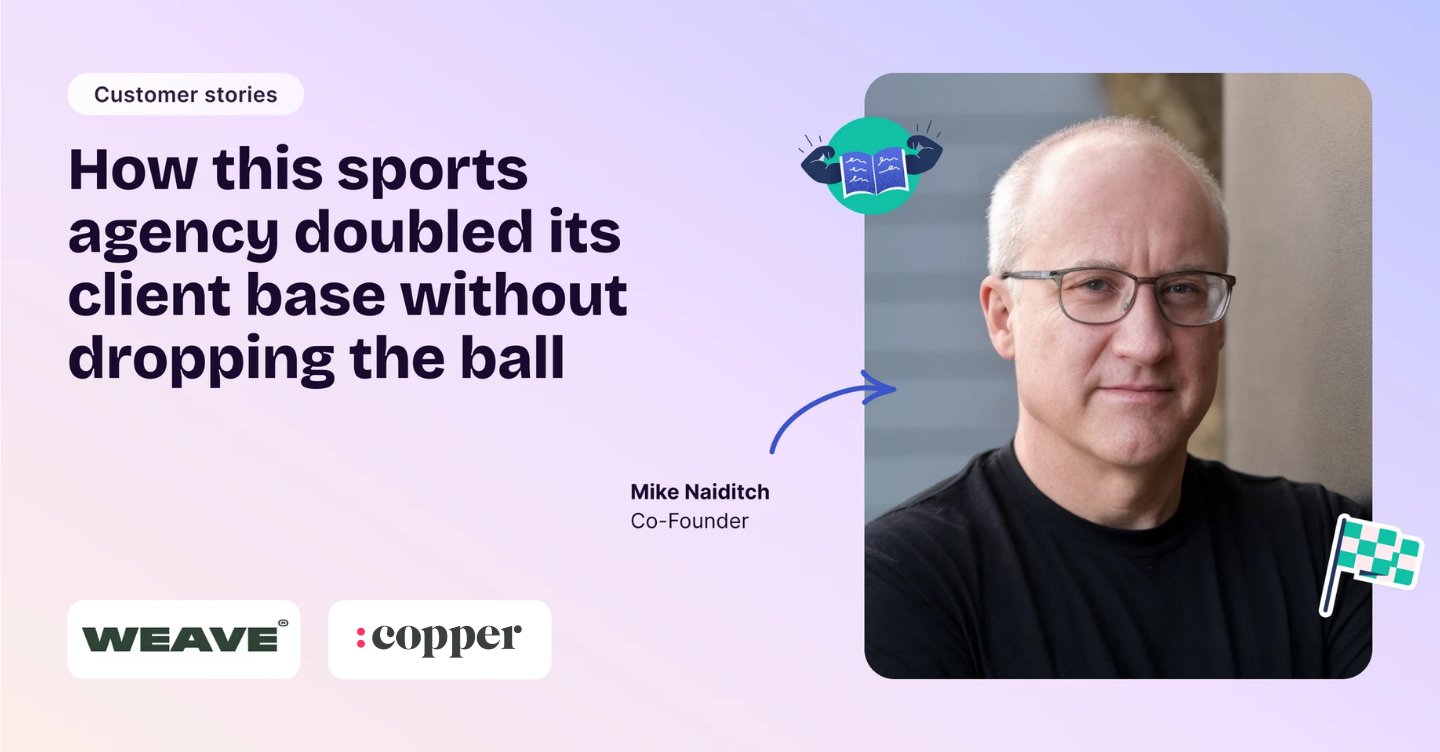
For Weave Agency, a basketball-focused sports agency representing players from high school through the pros, that pace is just part of the job.
Co-founder Mike Naiditch has been in the industry for over 20 years, and even though Weave is a relatively young agency, that experience shows. For them, growth was never the issue. The challenge was keeping everything organized as the agency expanded.
Before long, it became clear that the way Weave was managing information couldn’t keep up with where the business was headed.
When growth exposes every crack in your system
Before Copper, Weave got by with a mix of spreadsheets, phones, and a lot of information living in people’s heads. That setup worked in the early days, but it wasn’t designed for what was coming next.
“We knew that we were going to expand greatly,” said Naiditch, thinking back to the point when it became clear their existing systems would eventually slow them down.
As the agency started planning for growth, Weave looked at several customer relationship management (CRM) options, including platforms built specifically for sports agencies. On paper, they seemed promising. In practice, they felt restrictive. Customization for those tools didn’t help as much as expected. Instead of making the tools work for the business, Weave found themselves working for the tools.
“We spent almost all of our time with [these CRMs’ support teams] developing their platform,” said Naiditch. For the team, that time would have been better spent recruiting, negotiating, or building relationships.
All of this forced Weave to ask a simple question: what would it actually take to keep up? They didn’t need more features for the sake of features. They needed a system their team would actually use — one that could grow with them, fit into their existing workflows, and make it easier to keep track of relationships instead of harder.
That’s where Copper came in.
Why Copper clicked where everything else didn’t
Copper initially stood out for a practical reason: Google integration.
Weave is deeply embedded in Google Workspace, and Copper fits naturally. But the real shift happened during onboarding.
Instead of a rigid system that required constant vendor involvement, Copper gave Naiditch room to build. He could rename fields, move things around, and customize workflows without needing weekly meetings or development requests.
That balance mattered. Copper was intuitive enough for agents to adopt quickly, but flexible enough to grow with the business.
One source of truth changes everything
Weave’s first goal was simple: create a centralized database. Before Copper, spreadsheets caused confusion. Updates were missed. Some agents avoided them altogether. Naiditch even recalls that spreadsheets caused “anxiety attacks” for some team members.
“What we initially use Copper for is a client and prospect database,” said Naidtich. “Everything else is a nice bonus and more than we expected.”
Now, an agent enters a prospect. That record lives in the system permanently. From there, everyone can see whether a player is already being recruited, who owns the relationship, and what stage they’re in. That clarity got rid of duplicate work and internal friction almost immediately.
Pipelines are built around real player journeys
Weave structured Copper around how their business actually operates, using three pipelines:
- Prospect to signed client
- Finding the right school
- Contract negotiation through their professional progression
The first pipeline is the most critical, and automation keeps it moving. When an agent needs to send a contract, there’s no chasing people down or searching through messages.
“If the agent wants a DocuSign sent, they just click a box. That’s it,” says Naiditch.
From there, the player moves forward in the pipeline, their status is visible to everyone involved, and nothing gets lost.
Faster onboarding, without losing the personal touch
Once a player signs, Weave needs a lot of information and collecting it manually wasn’t sustainable.
Using Copper, that process is automated from the start. As soon as a contract is signed, Copper triggers an automated email that includes a Copper Form. The player fills out the form, and that information feeds directly into their client record.
And, because the email goes out immediately after signing, many players respond with excitement, even though the message itself is automated. The interaction feels timely and personal, not transactional.
Over time, Naiditch realized the form had become more than a data collection step.
“It’s another contact point with a client,” he says. “I think it’s underrated as a vehicle to say thank you and ‘what’s up.’”
It gave Weave a competitive advantage
Some of Weave’s most impactful workflows happen outside the CRM itself. Using Copper’s API, Naiditch built a dynamic, outward-facing client catalog that updates automatically.
“When we convert them to a client, automatically, it puts that client on our sortable outward-facing website,” he explains. There, each player appears as a live, searchable card that schools can browse on their own time.
“When we’re marketing our clients to schools, we could call 300 schools,” Naiditch says. “Or we can just tell them, ‘Go to our website.’”
From there, schools can sort players by name, position, and graduating class year, making it easy to find exactly who they’re looking for without back-and-forth emails or manual lists.
And it didn’t require a development team.
“Everything that you’ll see on that website was done just by myself,” says Naiditch. “That was a big, huge bonus.”
The platform is built for the road, and not just a desk
For most of Weave’s agents, Copper’s mobile app isn’t just convenient, it’s essential. The team is constantly on the move, traveling to games, meeting clients, and working wherever they happen to be that day.
Because of that, whatever the app can do matters. A lot.
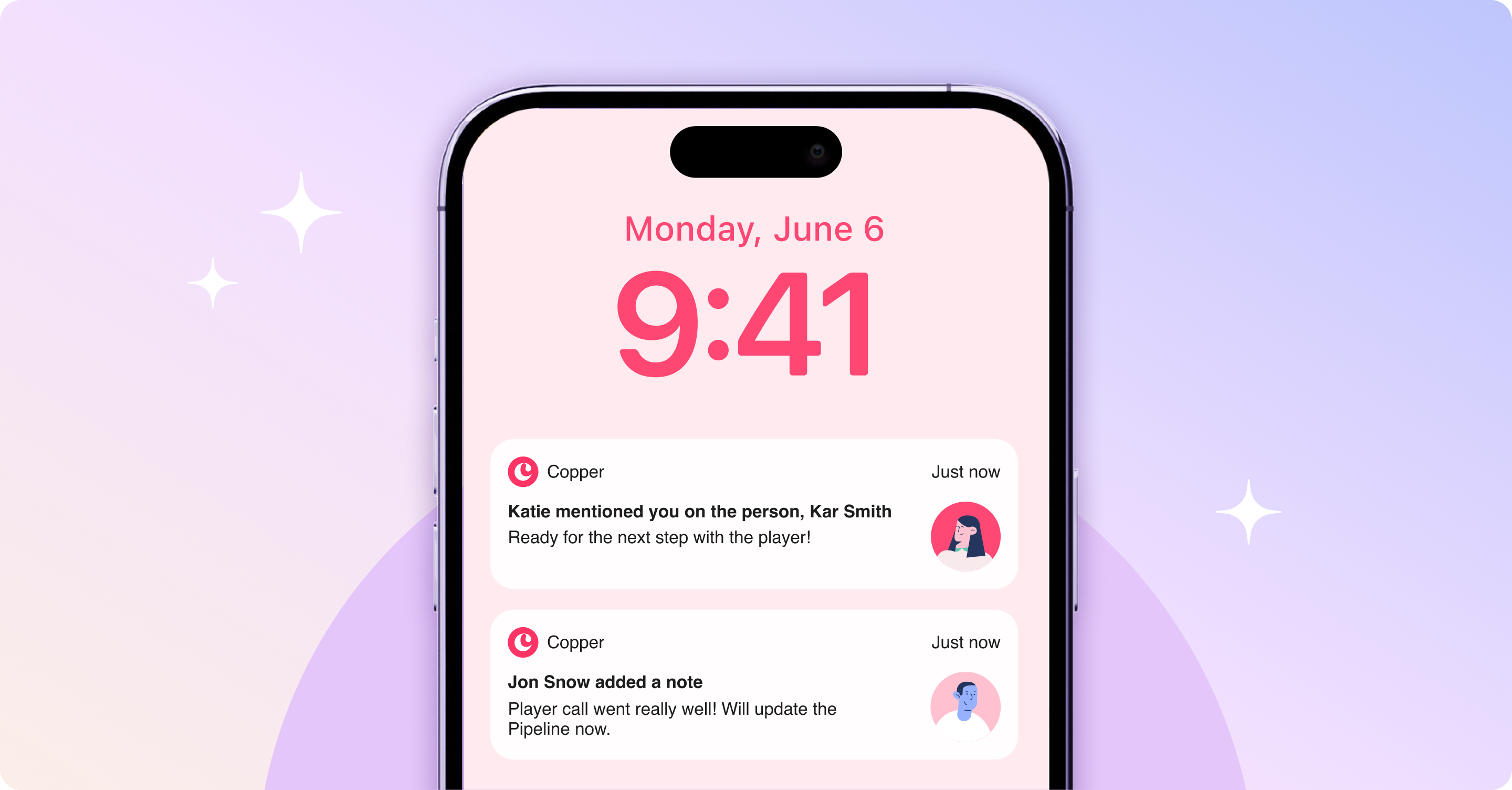
“The first thing is entering a prospect,” said Naiditch. “That’s the most important feature. That’s why we got Copper. Enter a prospect, populate the details, and he’s in the system.”
Once a player is in Copper, collaboration becomes easier. Other agents can see that someone has been added, recognize a shared connection, and step in when needed.
The result has been more growth and far less noise
In just one year, Weave doubled its client base, growing from roughly 200 to 400 players, without pulling focus away from recruiting, relationship-building, or negotiation.
At the end of the day, the biggest difference wasn’t operational. It was how the team got their time back.
“We shouldn’t be sitting here spending all of our experience and time on trying to find emails,” said Naiditch. “So now we’re more efficient and productive with our time.”
That shift made it possible to take on more clients, manage more relationships, and keep things moving. What changed wasn’t just how the team worked day to day. It was how the business scaled — and all without added complexity or burning out the team.
“I don’t know if Copper was intended for sports agencies, but it’s actually perfect for us.”
Curious what Copper could do for your team? Try Copper free for 14 days and see how much smoother your day-to-day can be.