











Some businesses follow trends. Aux Mode built a business by spotting one early and betting on it.
Founded by Adam Rumanek, Aux Mode helps brands, media companies, and creators do three things exceptionally well: monetize their content, protect it from misuse, and scale distribution across platforms like YouTube and Facebook. It’s a deceptively simple description for a business that now manages millions of videos and generates millions in revenue for clients every month.
But rewind the clock, and it started much smaller.
“I first started this in the kitchen like any good startup,” Rumanek says, describing the early days of building the company from scratch.
What set Aux Mode apart early on wasn’t just execution — it was timing. Long before streaming became the default, Rumanek was already betting on it. He was flying to LA and Europe, pitching studios and distributors on a future where digital platforms would dominate.
“I had to explain how you make money on these platforms and nobody knew,” he says. Fast forward to today, and that bet has paid off.
When spreadsheets stop scaling
Like most founders, Rumanek didn’t start with a CRM. He started with spreadsheets. And for a while, that worked.
When you’re managing a handful of customers, everything can live in your head (and maybe a few tabs open in Google Sheets). But as Aux Mode grew — which meant more clients, more deals, more salespeople — that system started to break.
“We started getting 10, then 15, then 25 clients and I can’t manage my prospects and leads,” he says. “How am I supposed to do this in a spreadsheet?”
The challenges stacked up quickly:
- Leads and opportunities weren’t centralized
- Sales activity became harder to track across the team
- Ownership of deals got murky (and fast!)
- And reporting? Practically nonexistent
Rumanek tested a couple of CRM options. One looked great on the surface but didn’t deliver. Another lacked the integrations his team needed. And for him, that last point mattered more than anything.
“I’m all about simplicity,” he says. And simplicity, for Aux Mode, meant everything had to work together seamlessly.
The solution was a CRM that fits how they already work
Rumanek didn’t find Copper through ads or sales outreach. He found it the way a lot of founders do: by digging.
“It was the only one that integrated into an ecosystem I was already in. I’m a huge fan of Google,” he says.
That Google Workspace integration became the foundation. But what really made the difference was how Copper helped Aux Mode move from scattered processes to a scalable system.
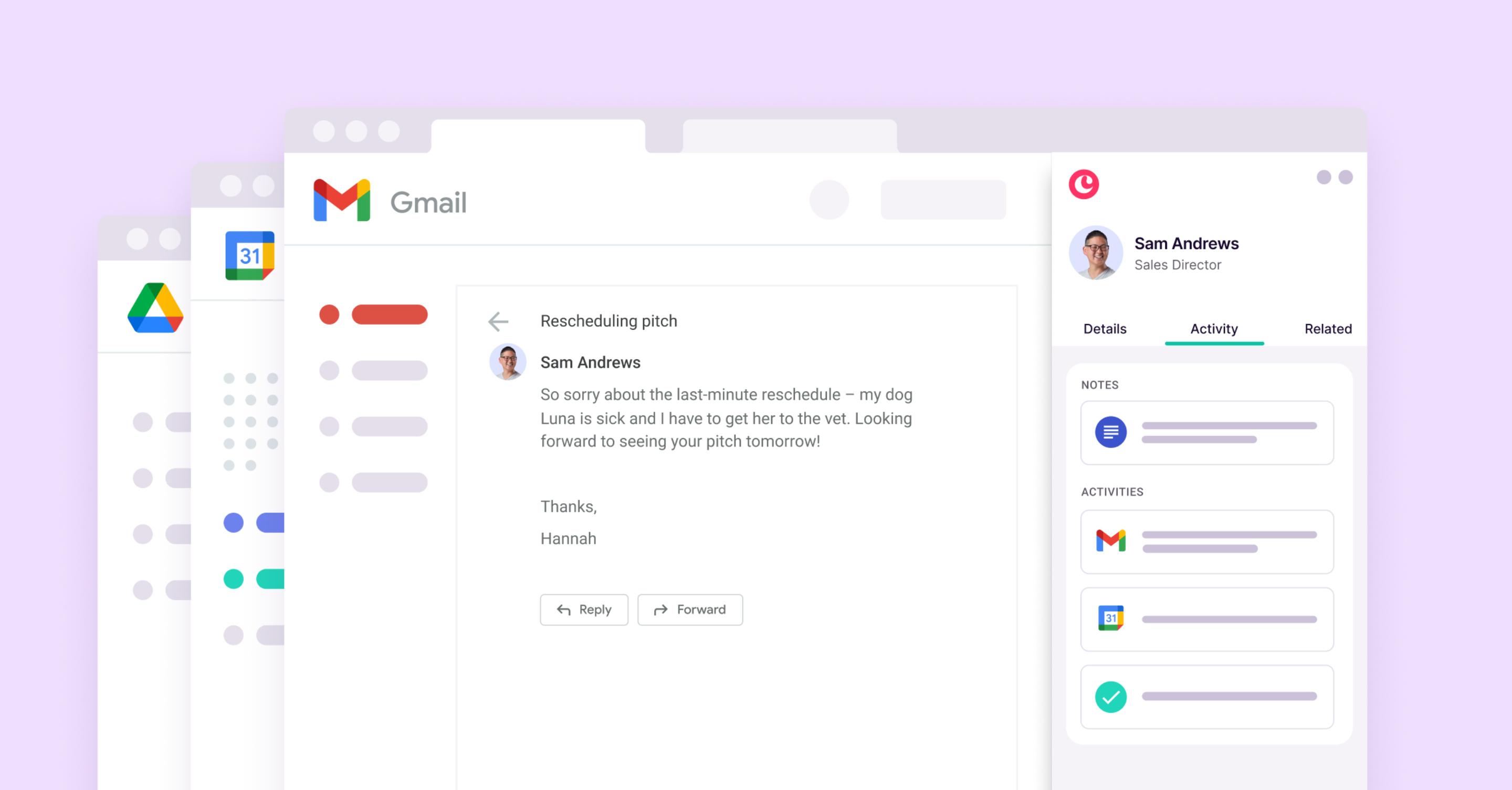
At a high level, Copper helped them:
- Centralize leads, contacts, and opportunities
- Build structured sales pipelines
- Automate outreach and follow-ups
- Track performance across the team
- Forecast future revenue with real data
Building a real sales engine (not just a pipeline)
Initially, Rumanek only wanted one thing from a CRM: visibility into sales. But once the system was in place, the team started going deeper, especially with pipelines.
Today, Aux Mode runs three distinct pipelines, allowing them to segment opportunities and manage volume more effectively.
Rumanek still keeps a close eye on everything. But now, he doesn’t have to chase information down.
“I hold all the opportunities, and if someone has 40 and I can see they’ve communicated with all of them and kept them updated, I’ll just give them another 10,” he says.
That level of visibility changed how the team operates. Instead of reacting, they’re proactively managing workload and performance.
Just as important, it’s a system the team actually uses every day. Six team members are actively in Copper across sales and support, with someone in the system consistently keeping data clean and up to date. That consistency is what makes everything else work. Pipelines reflect what’s actually happening, reports stay accurate, and forecasts become something the team can rely on.
“I believe the foundation to this program is good data,” Rumanek says.
Turning leads into a scalable system
One of the biggest shifts for Aux Mode came from how they handle leads. At first, leads were just data, like a list or something to keep track of. Now, they’re an engine.
After importing and cleaning over 10,000 leads, the team built a structured approach inside Copper that connects outreach directly to pipeline movement.
Here’s what that looks like in practice:
- Leads are organized and enriched (including LinkedIn data)
- Bulk emails are sent directly through Copper
- Engagement is tracked automatically
- Qualified leads move into pipelines seamlessly
“We started using Copper’s bulk email tool,” he says. “And now I can do this in one ecosystem.”
This also allowed them to move away from separate tools like Mailchimp for outreach, simplifying their stack even further.
Automation that actually compounds over time
Rumanek doesn’t think about efficiency in big, sweeping changes. Instead, he thinks in minutes.
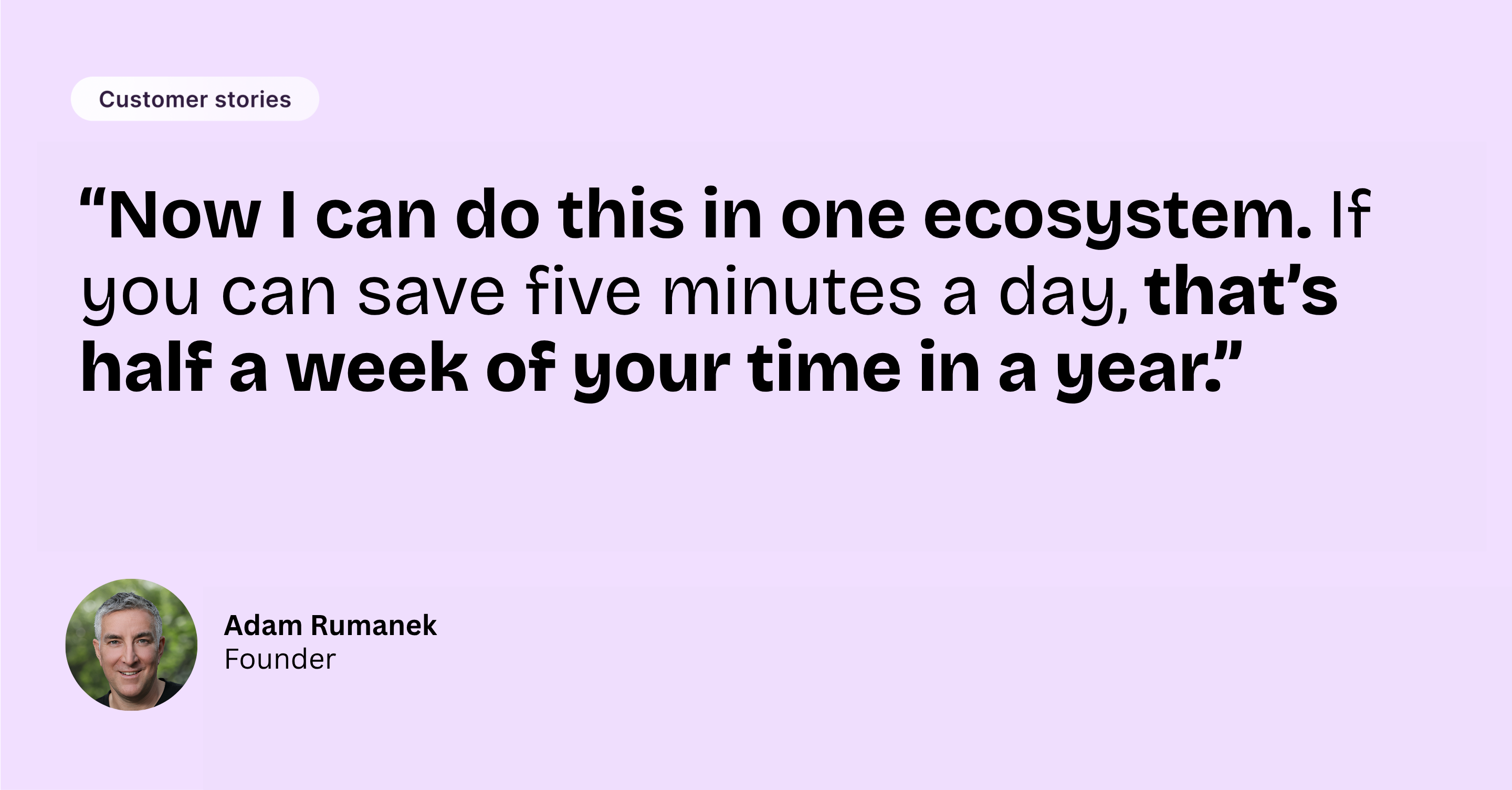
“If you can save five minutes a day, that’s half a week of your time in a year,” he says. And with Copper, those minutes add up quickly. Automations now handle follow-up email sequences, move leads through stages based on activity, and take care of tracking and reminders in the background. Because everything lives inside the same system, there’s no back-and-forth between tools, which keeps the process simple and consistent for the team.
From gut feel to real forecasting
Before Copper, forecasting wasn’t really a thing at Aux Mode. Like many growing businesses, decisions were based on instinct and experience. Rumanek knew the business well, but there wasn’t a structured way to validate what was coming next.
Now, that’s changed.
“It allows you to kind of see the future. I can see what the summer of 2027 is going to look like,” Rumanek says.
With Copper’s reporting and forecasting tools, Aux Mode can identify pipeline gaps early, set more realistic sales targets, and hold the team accountable to performance. What used to live in someone’s head is now visible, measurable, and shared.
That visibility has also changed how Rumanek manages the team. Instead of waiting for results at the end of the month, he can spot issues as they’re forming.
He can see when deals are stalling, when pipelines are too heavy at the top, or when there aren’t enough opportunities moving into later stages. And when something’s off, he addresses it directly.
What Aux Mode proves about scaling the right way
Even with everything they’ve built, Aux Mode isn’t done refining how they work.
The team is already looking at ways to go deeper with Copper, including replacing internal tracking spreadsheets project pipelines, expanding their use of forms and LinkedIn integrations, and continuing to fine-tune their go-to-market strategy inside the platform. The goal isn’t to add more tools. The goal is to make the system tighter, more efficient, and easier to manage at scale.
That mindset shows up across the business. Aux Mode didn’t grow by adding more manual work or layering on complexity. They focused on building systems that could support growth without constantly needing to be reworked.
Copper became part of that system. It gave the team a clearer way to manage sales, track data, and understand what’s coming next. It also helped shift key processes out of one person’s head and into something the team can use day to day.
If you’re curious what that could look like in your own workflow, you can try Copper free for 14 days and see how it fits.