











Congrats, your agency is "doing AI." Now what?
There's a Slack channel full of prompts. Someone bookmarked twelve tools they haven't opened since. At least one person has declared — with full sincerity — that copywriters will be obsolete by Thursday. The energy is there. The strategy... less so.
Because here's the thing: most agencies aren't ignoring AI anymore. They're just treating it like a party trick instead of the operational infrastructure it actually is.
(Big difference!)
Because AI isn’t the future anymore. It’s already woven into how modern agencies work — from proposals to reporting to client communication to pipeline management. The agencies pulling ahead aren’t the ones using the most AI tools. They’re the ones using AI intentionally.
Meanwhile, everyone else is drowning in disconnected prompts, generic outputs, and five AI different subscriptions nobody fully understands.
So let’s talk about where agencies are getting AI adoption wrong — and what smarter adoption actually looks like.
Mistake #1: Treating AI like a shortcut instead of a system
Most agencies kicked off their AI era with something like "wait, can ChatGPT just write this email?" And look — yes! Great! Do that! Small wins are real wins.
But then a lot of teams just... stayed there. AI for one-off tasks. AI for a brainstorm when someone's stuck. AI for a proposal draft when the deadline is tomorrow and nobody has started. Never connected to how the agency actually runs day-to-day.
Which creates this really specific kind of chaos: one person has the good prompts saved somewhere, another refuses to use AI on principle, someone else is quietly rewriting every AI output because it keeps missing the mark, and nobody can figure out why it's not saving any time.
Sound familiar?
The shift that actually works is moving from "can AI do this task" to "where is our team losing time, and can AI live there permanently?" That's a different question — and it's the one worth answering:
- Audit your workflows
- Find the friction
- Put AI there, intentionally, and actually build it into how work gets done.
Mistake #2: Thinking more AI tools means better AI adoption
We need to talk about the agency tech stack spiral. Because some teams now have:
- ChatGPT
- Claude
- Gemini
- Notion AI
- AI meeting recorders
- AI chatbots
- AI email assistants
- AI design tools
- AI workflow tools
- AI research tools
- AI CRM plugins
- And approximately 47 Chrome extensions someone saw on LinkedIn
At some point, you don’t have an AI strategy. Instead, you have digital clutter.
(And probably three duplicate subscriptions nobody canceled.)
The goal isn’t to collect AI tools like Pokémon cards. The goal is to create smoother operations. That means your AI tools should work with your workflows, not become another thing employees have to manage.
The ultimate goal here is to consolidate.
Pick a small stack that lives inside the tools your team already uses every day — not alongside them. One AI tool that's actually embedded in your workflow beats six disconnected ones that require everyone to remember to open them.
Mistake #3: Forgetting that client relationships still matter
Some agencies got so excited about automation that they accidentally automated away their personality. And listen, nobody hires an agency because they want robotic communication.
Clients still want:
- responsiveness
- creativity
- strategic thinking
- emotional intelligence
- trust
- collaboration
AI can support those things. It shouldn’t replace them.
The best agencies are using AI to remove admin work so humans can spend more time being strategic and relational.
That means:
- AI drafting follow-up emails
- AI summarizing meetings
- AI organizing deal notes
- AI helping surface next steps
- AI assisting with reporting
- AI helping prep client communications
…while the actual human team focuses on insight, creativity, and relationship-building.
That’s the sweet spot. Because clients don’t want “AI-generated agencies.” They want agencies that are fast, organized, thoughtful, and proactive.
AI just helps you get there faster.
Mistake #4: Using AI without shared context
This is the big one. Most AI outputs are only as good as the context they’re given. And agencies are notoriously messy with context.
Client information ends up scattered across inboxes, Slack threads, random docs, meeting notes, spreadsheets from 2023, “the deck somewhere,” and someone’s memory… which is exactly why so many agencies struggle to give AI enough context to actually be useful.
So when teams try to use AI without centralized client information, the outputs end up generic because the AI has no meaningful business context to work from.
This is exactly why CRM-connected AI matters so much.
When your AI can actually pull from relationship history, pipeline stages, client notes, previous conversations, and project context, suddenly the outputs become useful in a real operational way.
That’s where Copper’s approach feels especially practical for agencies.
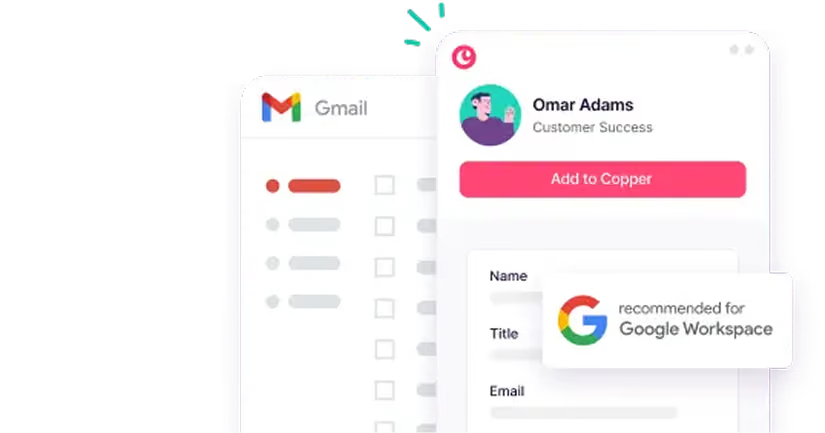
Instead of forcing teams to leave their workflow, Copper brings AI directly into the CRM environment agencies already use to manage relationships and pipeline activity.
How Copper and Gemini actually help agencies work smarter
This is exactly the problem Copper is built to solve, and why CRM-connected AI hits so differently than yet another standalone tool.
When your AI can pull from real relationship history, real pipeline stages, real client notes and conversations, the outputs stop being generic filler and start being actually actionable. The context is already there.
The AI just gets to work with it.
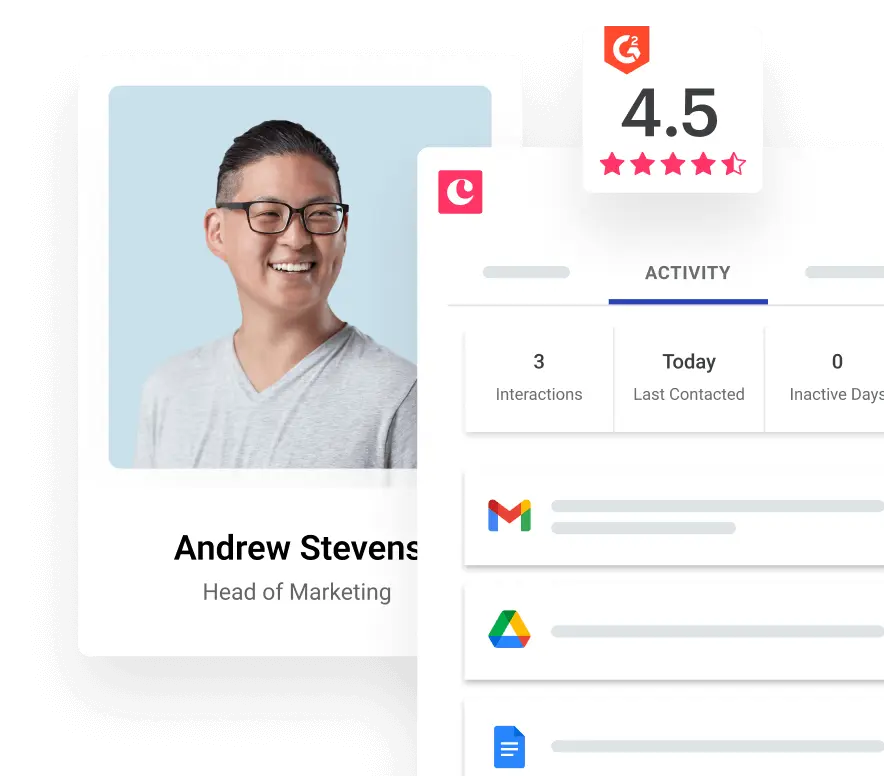
For teams in Google Workspace, Copper and Gemini make this genuinely exciting. Gemini works directly alongside your Copper records in Chrome, so instead of doing the whole dig-through-everything ritual before every client call, your team gets a full snapshot of the relationship in seconds: recent activity, open opportunities, deal risks, things that need follow-up.
And all right there!
From there, it gets kind of fun. Gemini can draft your follow-up email already knowing the client's history. It can spot "hey this person is probably ready to buy" signals hiding in old conversations. It'll flag the question that never got answered three meetings ago. It can even pull in stuff like recent company news or the fact that they're actively hiring, all the context that makes you look like you really did your homework, without actually having to do all of it.
What used to be a 20-minute pre-call scramble is now just... handled.
That's the real unlock. The agencies crushing it with AI right now aren't just writing faster — they've built a system where AI actually knows enough to be helpful. Copper keeps everything in one place. Gemini does something smart with it. Your team shows up to every client interaction ready to go instead of still catching up.
Sounds pretty good, right? Try Copper free for 14 days and see for yourself.