











If you're looking for the best CRM for media companies, chances are you're not just trying to organize contacts. You're trying to keep advertisers, sponsors, talent, production, and client conversations from turning into a game of "Wait... who has the latest version?"
Media companies don't have simple sales cycles. One day you're pitching a new sponsor. The next you're chasing creative approvals, negotiating talent contracts, answering campaign questions, and planning a renewal call for a client you've worked with for years. Somewhere in the middle of all that, someone inevitably asks, "Does anyone know what we promised them?"
Cue the frantic search through Gmail, Slack, spreadsheets, meeting notes, and the one account executive who's somehow become the unofficial source of truth.
That's exactly where the right CRM makes all the difference.
The problem is that most CRM software wasn't built for businesses like yours. It was designed for transactional sales teams that move leads from point A to point B before handing customers off to someone else.
Media companies don't work that way. You probably need project management, contact management, and relationship management every single day.
That's why we've compared six of the best CRM platforms for media companies in 2026, breaking down what each one does well, where it falls short, and which type of team it's actually built for.
Why media companies need a CRM
Most articles will tell you a CRM helps you track contacts and deals.
Technically? Sure.
But if you're running a media company, that's a bit like saying a camera is just for taking pictures.
Your business runs on relationships. Relationships that generate ad revenue, bring in sponsorships, fuel lead generation, and turn one successful campaign into the next renewal. Those relationships don't live with just one person, either. They're shared across account executives, producers, client success managers, finance teams, and everyone in between.
One advertiser relationship might involve someone pitching the sponsorship, someone else negotiating contracts, another person coordinating campaign delivery, and someone else reporting on results. If even one piece of that story lives in a personal inbox or someone's memory, your entire team loses context the moment they're on vacation, buried in meetings, or leave the company altogether.
That's why a CRM for media companies isn't just another sales tool. It's the single source of truth that keeps your revenue engine running.
A few scenarios that might hit a little too close to home:
- A sponsor asks for a campaign update, but the only person with the answer is halfway through a cross-country flight.
- Your ad sales team is preparing a renewal pitch without realizing the advertiser's last campaign missed its goals.
- A promising lead comes in, but nobody follows up because everyone assumed someone else had it covered.
- A new account executive spends their first week asking around the office just to understand a client relationship that's been running for years.
Sound familiar?
When every conversation, campaign, touchpoint, and opportunity lives in one place, your team spends less time playing detective and more time growing revenue, building stronger client relationships, and delivering campaigns that keep advertisers coming back.What to look for in a CRM for media companies
Before you get to the list: know what you're actually comparing. A generic "best CRM" roundup will hand you a checklist built for SaaS sales teams: lead scoring, forecasting, quota tracking. None of that maps onto how media businesses make money. Here's what to look at instead.
What to look for in a CRM for media companies
Not every CRM is built for the way media companies operate.
The best CRM for media companies should do more than track contacts. It should help your team manage sponsorships, streamline deal management, support lead generation, strengthen client relationships, and keep campaigns moving from the first pitch to the final performance report.
Whether you're growing ad revenue, improving audience engagement, or juggling dozens of active partnerships, the right CRM should make your work feel simpler, not add another system to maintain.
Here are the features worth paying attention to.
Customizable pipelines that match how media deals actually close
Media deals rarely follow the same path twice.
A podcast sponsorship looks different from a branded content campaign. A one-off newsletter placement has different milestones than a year-long advertising partnership. Trying to force every opportunity through the same pipeline usually ends with your team creating workarounds that make reporting and deal management messier than they need to be.
Look for a CRM that lets you customize every stage of your pipeline, whether you're managing sponsorships, ad sales, partnerships, or lead generation. The closer your CRM reflects how your business actually sells, the more accurate your forecasting and reporting will be.
Built-in project management that doesn't stop after the sale
Winning the deal is exciting.
Keeping the client happy is what keeps the ad revenue coming.
Once a contract is signed, your team is suddenly managing creative approvals, production timelines, deliverables, audience engagement metrics, reporting, and client communication. If your CRM checks out the second the deal closes, you're back to juggling spreadsheets, email chains, and Slack messages just to figure out who's doing what.
The best CRM for media companies supports the entire client lifecycle, helping your sales, production, and client success teams stay aligned long after the contract is signed.
Gmail and Google Workspace integration that actually saves time
Let's be honest: your team already lives in Gmail.
Between emails, Google Calendar meetings, Docs, and Drive, that's where the work is happening. Asking everyone to manually copy information into a separate CRM isn't a workflow. It's homework.
A CRM that integrates deeply with Google Workspace automatically keeps client conversations, meeting notes, files, and activities connected, so your team spends less time updating records and more time building relationships.
One place for every client conversation
Quick reality check: If your top account executive disappeared for two weeks tomorrow, could someone else confidently pick up every client conversation without asking, "Wait...what happened here?"
If not, your business doesn't have a people problem. It has a visibility problem.
Every email, meeting, proposal, note, sponsorship discussion, and campaign update should live in one shared place. When everyone has the same context, your team can move faster, collaborate better, and deliver a far more consistent client experience.
Reporting that connects your work to revenue
You launched five sponsorship campaigns. Your audience engagement numbers looked great. Lead generation was up. Ad revenue increased.
Now comes the important question:
What actually drove those results?
A strong CRM helps you connect campaigns to outcomes, showing which sales efforts generated the most revenue, which partnerships converted into long-term clients, where your best leads came from, and which opportunities deserve more investment.
Instead of making decisions based on gut feeling, your team can confidently double down on what's actually working.
Simple setup and fast team adoption
The best CRM in the world won't help you grow ad revenue or improve deal management if nobody wants to use it.
Media teams are busy. They're pitching sponsors, managing campaigns, creating content, and chasing deadlines. Nobody has six weeks to learn a new platform or a full-time CRM admin sitting around configuring custom fields.
If logging a client call feels like homework, your team will quietly go back to Gmail, spreadsheets, and a file called “real_pipeline_FINAL_v7.xlsx.
The right CRM should feel intuitive from day one. Your team should be able to jump in, manage deals, update client relationships, and collaborate without needing a training manual or a dozen onboarding sessions. Because the easier a CRM is to adopt, the more complete (and useful) your data becomes.
The 6 best CRMs for media companies compared
1. Copper
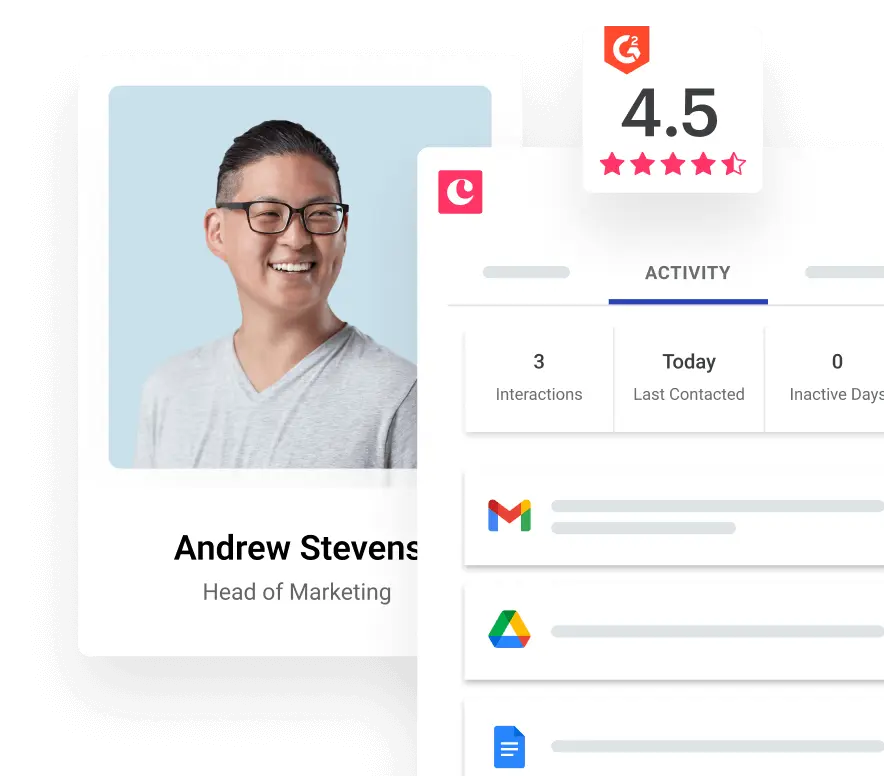
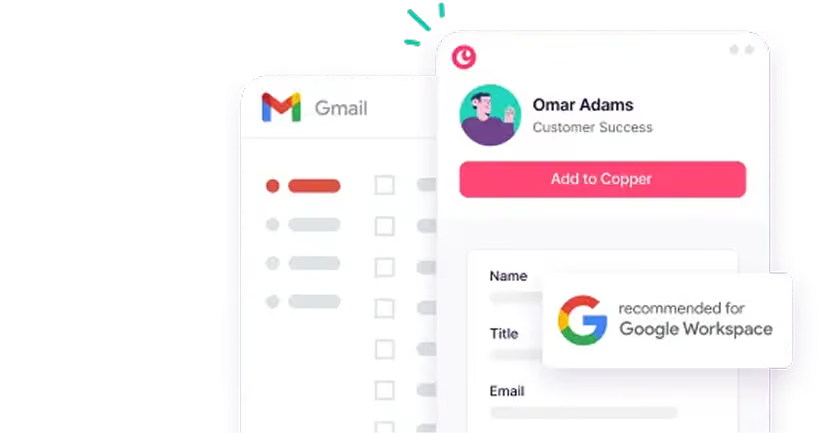
If your team runs on Google Workspace, Copper's the clearest fit here. It's the only customer relationship management (CRM) platform that's a Recommended for Google Workspace app, a Chrome Enterprise Partner, and a Google-backed company, and that shows up in how it actually works: Copper lives inside Gmail, auto-logs your emails and meetings to the right contact, and gives you Opportunity Pipelines for ad sales alongside Project Pipelines for tracking delivery after the deal closes.
Sales and delivery in one platform, without the tab-switching. For media teams juggling advertisers, sponsors, and content partners, that combination is genuinely hard to find elsewhere.
- Best for: Media teams already working in Gmail, Calendar, and Drive.
- Standout feature: CRM lives inside Gmail, no tab-switching to log emails or update contacts.
- Limitation: Google-only; doesn't integrate with Microsoft or Outlook.
2. HubSpot
HubSpot makes sense if your media business runs on inbound: content, SEO, a steady drip of leads your own marketing engine generates. There's a free tier, real marketing automation, and reporting that actually connects content to pipeline. Solid stuff.
The tradeoff shows up as you grow. The features that make HubSpot powerful (workflows, advanced reporting, multiple hubs) start stacking up in cost fast, and a lean media team can end up paying enterprise prices for tools it only half uses.
- Best for: Media companies with content marketing engines driving inbound leads.
- Standout feature: Connected marketing, sales, and service hubs with robust reporting.
- Limitation: Advanced features require paid tiers that can get expensive for small teams.
3. Pipedrive
Pipedrive does one thing and does it well: moving deals through a pipeline, visually, fast. If your media company runs a high-volume outbound ad sales motion (lots of pitches, lots of stages, lots of reps working the phones all day), Pipedrive's drag-and-drop pipeline will feel instantly familiar.
Where it comes up short: everything after the "yes." Pipedrive wasn't built to track production schedules or campaign delivery, so teams often end up bolting on a separate project tool anyway, which kind of defeats the purpose.
- Best for: Ad sales teams and media companies with high-volume outbound pipelines.
- Standout feature: Visual pipeline management with clear deal stages.
- Limitation: Limited project management functionality after deals close.
4. Streak
Streak is about as lightweight as a Gmail-native CRM gets, which makes it a fine starting point for a freelancer or a two-person media shop that just needs somewhere to track a handful of relationships. Free to start. Dead simple to set up. No complaints there.
But simplicity has a ceiling, and you'll hit it. The moment your team grows past "just us," or your ad sales process needs more than a basic pipeline, you'll outgrow Streak fast.
- Best for: Solo creators, freelancers, or very small media teams.
- Standout feature: Lives entirely inside Gmail with minimal setup.
- Limitation: Feature set is basic; may outgrow it quickly as team scales.
5. Monday CRM
Monday CRM comes at this from a totally different angle. Instead of a traditional CRM with project features tacked on, it's a visual work platform with CRM functionality added in. If your team already thinks in boards, columns, and automations, and you want sales tracking and delivery living in the same visual workspace, that flexibility is genuinely useful.
Just know that the CRM layer is newer than the project management side it grew out of. Translation: expect to spend more time configuring it to behave like a dedicated sales tool.
- Best for: Media teams that want CRM and project tracking in one visual workspace.
- Standout feature: Highly customizable boards and workflow automations.
- Limitation: CRM functionality is newer; may require more setup to match dedicated CRM tools.
6. Salesforce
Salesforce is the name every enterprise media company already knows, and for good reason. The customization ceiling is basically nonexistent, and it scales to sales operations of any complexity you can throw at it.
That power comes at a cost, and not just the financial kind. Salesforce is built for organizations with dedicated CRM administrators, real implementation budget, and patience for a genuinely steep learning curve. For a lean media team? It's usually more tool than you need, and more headache than you signed up for.
- Best for: Large media enterprises with complex sales operations and dedicated CRM administrators.
- Standout feature: Unmatched customization and third-party app ecosystem.
- Limitation: Steep learning curve and significant investment in setup and ongoing management.
How to choose the right CRM for your media business
By now, you've probably noticed something: there isn't one "best" CRM for every media company.
The right choice depends on how your team works today—and where you expect it to be a year from now. Instead of comparing feature lists line by line, start by finding the scenario that sounds most like your business.
Small studios and independent producers
If it's just you (or maybe a couple of teammates) managing sponsors, advertisers, and client relationships, you don't need enterprise software—or the implementation project that comes with it.
Streak and Copper are both strong options because they're easy to get up and running without a dedicated CRM admin. If you're planning to grow, though, Copper gives you more room to scale. You can start with simple contact and deal management, then add customizable pipelines, project tracking, and reporting as your business grows—without migrating to a new platform six months later.
Because let's be honest: moving CRMs once is enough.
Growing creative agencies and content teams
Growth is exciting... until everyone starts asking, "Who's talking to this client?"
Once you've got multiple people managing sponsors, partnerships, and campaign delivery, visibility becomes just as important as lead generation. You need a CRM that doesn't just track deals, but helps your sales, production, and client success teams stay aligned from the first conversation through final delivery.
Copper and HubSpot are both great choices here. HubSpot shines for teams with a heavy inbound marketing engine, while Copper is built for teams that want deal management, project tracking, and Google Workspace all working together in one place.
Publishers, media networks, and high-volume teams
Managing a handful of client relationships is one thing. Managing hundreds across advertisers, talent, agencies, and content partners is another.
At this stage, reporting, collaboration, and operational visibility become just as important as your sales pipeline. HubSpot, Salesforce, and Copper can all support complex media businesses, but the best fit comes down to how your team works. If you're already living in Gmail, Google Calendar, and Drive, choosing a CRM that works inside Google Workspace can save your team countless hours of manual updates and context switching.
Choose a CRM that's built for the entire relationship
Here's the thing.
Every CRM on this list can help you organize contacts and manage deals.
The real question is what happens after someone signs the contract.
Media businesses don't stop at the sale. You're managing sponsorships, coordinating campaign delivery, tracking audience engagement, measuring performance, and nurturing long-term client relationships that drive future ad revenue.
That's why the best CRM for media companies doesn't just support deal management. It supports everything that comes after.
Copper was built with exactly that in mind. From lead generation and ad sales to project tracking and client delivery, everything lives in one place—right inside Gmail and Google Workspace, where your team is already working.
So if you're looking for a CRM that helps your team spend less time updating records and more time building stronger client relationships, you're in the right place.
Try Copper now for 14 days free and see how a CRM built for relationship-driven businesses can help your media team stay organized, collaborate better, and grow with confidence.