









Your CRM has a field called "MQL Tier 3."
No one on your team knows what it means. No one has ever filled it out. Yet somehow, it's survived every cleanup, every onboarding session, and every "we should probably audit our CRM" meeting. (You know the ones.)
Sound familiar?
It's usually the first sign you've outgrown your CRM. Maybe you've started searching for a customizable CRM. Maybe you've even wondered if you need a fully custom CRM built from scratch. The good news? Most growing businesses don't need to go that far. They just need software that adapts to the way they work.
What started as a tool to make work easier has slowly become something your team works around instead of with. You're tracking important details in spreadsheets because the CRM doesn't have the right fields. You're renaming pipeline stages in your head because the defaults don't match your process. Half the team only updates records when someone reminds them. Again.
The problem isn't that your team needs more training.
It's that your CRM was built for someone else's business.
Growing companies don't stay the same for long. You hire new people, launch new services, refine your sales process, and figure out better ways of working as you go. Your CRM should be able to keep up with all of that instead of forcing you into the same workflow you had three years ago.
That's exactly what a customizable CRM is designed to do.
Instead of making you adapt to the software, it adapts to you. You decide what information matters, what your pipelines look like, and how work moves from one stage to the next. The CRM simply supports the way your team already works. (Imagine that.)
In this guide, we'll explain what a customizable CRM is, how it compares to a custom CRM, why growing teams benefit from one, the features worth looking for, and the seven best customizable CRM platforms available today.
Key takeaways
- A customizable CRM lets you tailor fields, pipelines, workflows, dashboards, and automations to fit the way your business works.
- Growing teams benefit the most because your processes evolve as you hire, launch new services, and scale.
- The best customizable CRM platforms include Copper, HubSpot, Pipedrive, Zoho CRM, monday CRM, Streak, and Close.
- If your team works in Google Workspace, Copper offers the deepest native integration with Gmail, Google Calendar, and Google Drive.
What is a customizable CRM?
A customizable CRM is a customer relationship management platform that lets you shape the software around the way your business actually works.
Instead of forcing every company into the same sales process, it gives you the flexibility to create your own pipelines, build custom fields, automate repetitive work, and organize customer information in a way that makes sense for your team.
Think of it like moving into a new place.
A rigid CRM is the fully furnished rental. The couch is already there. The dining table is in a weird spot. You can live with it, but it never quite feels like yours.
Custom CRM software hands you the keys and says, "Arrange it however you want."
Need a pipeline for client onboarding? Go for it.
Want to track referral partners, contract renewal dates, or project scope? Add the fields.
Launching a new service? Build a new workflow instead of trying to squeeze it into the old one.
The software bends to fit your business, not the other way around.
And that's a pretty big deal because no growing company has everything figured out from day one. Your processes will change. Your team will grow. Your CRM should make those changes easy instead of turning them into a six-week implementation project. (Nobody has time for that.)
Customizable CRM vs. custom-built CRM
These two terms get mixed up all the time, but they're solving very different problems.
A customizable CRM is an existing platform that gives you the flexibility to tailor it to your business. You can create custom fields, build your own pipelines, automate repetitive tasks, adjust permissions, and customize dashboards, all without writing code or building software from scratch.
A custom-built CRM, on the other hand, is exactly what it sounds like. Instead of buying an existing platform, you're creating one from the ground up. That means working with developers to design, build, test, launch, and maintain your own CRM. You get complete control over every feature and workflow, but you're also responsible for every bug, update, and future improvement. (Which can get expensive. Fast.)
For most growing businesses, a custom-built CRM is more than you actually need.
Today's CRM platforms are flexible enough to support different sales processes, customer journeys, and reporting needs without requiring a dedicated development team. You get the freedom to build a CRM that works for your business while leaving the maintenance, security updates, and new features to the software provider.
In other words, you get the flexibility of a tailored solution without taking on the cost and complexity of building one yourself. Unless your business has highly specialized requirements that existing CRMs simply can't support, a customizable CRM is almost always the smarter investment.
Why growing teams need a customizable CRM
Here's the thing about growth. Everyone loves talking about the exciting parts, like landing bigger clients, expanding your team, or launching new services. No one talks about the operational chaos that comes with it.
The process that worked perfectly when your team was five people suddenly starts showing cracks. Sales is collecting information that customer success needs but can't access. You've launched a new service, but your CRM still treats every deal exactly the same. Someone suggests creating another spreadsheet "just for now," and before you know it, you're managing customer information across five different places. (We both know "just for now" somehow turns into three years.)
Customizable CRM software helps you avoid all of that. Instead of forcing your business into the same workflow forever, it gives you the flexibility to adapt as you grow. Because let's be honest, your business isn't standing still. Your CRM shouldn't either.
Match your workflow instead of forcing a new one
Every business has its own way of doing things, and that's exactly how it should be.
Maybe your agency moves every client from Discovery to Proposal to Contract to Kickoff. Maybe your consulting business has completely different stages depending on whether it's a strategy engagement or a long-term retainer. Or maybe you've built a process that works so well your team could practically run it in their sleep.
Then your CRM comes along and says, "Actually... everyone uses Qualified, Presentation, and Negotiation."
Hard pass.
A customizable CRM lets you build your pipelines around the way your team already works instead of asking everyone to learn a completely new language. It sounds like a small thing, but it makes a huge difference. When people open the CRM and immediately recognize every stage, they're far more likely to actually use it. No mental gymnastics required.
Adapt faster as your team scales
Growth has a funny way of making yesterday's "perfect process" feel completely outdated.
You hire a customer success manager and suddenly realize your sales pipeline isn't designed to handle onboarding. You launch a second service and need a completely different customer journey. Your team doubles in size, and now everyone definitely shouldn't have access to everything anymore. (It was fun while it lasted.)
With a customizable CRM, those changes don't become six-week projects. You can create new pipelines, add custom fields, adjust permissions, and build new automations whenever your business changes. No developers. No support tickets. No crossing your fingers that the software can actually keep up.
Your CRM should evolve as quickly as your business does. Otherwise, it's just another thing slowing everyone down.
Drive higher adoption across your team
Can we all agree that the best CRM isn't the one with the longest feature list?
It's the one people actually open.
Because we've all seen what happens when a CRM feels like homework. People skip updating deals because they're too busy. Customer notes end up in Slack instead. Someone swears they'll update everything on Friday afternoon. (Spoiler: they won't.)
Before long, no one trusts the data because no one knows whether it's actually accurate.
A customizable CRM removes a lot of that friction. Your team sees familiar terminology, logical workflows, and fields that actually matter to their role instead of dozens of boxes they never touch. Updating customer information becomes part of the work instead of another task sitting on an endless to-do list.
And when using the CRM feels easy, something magical happens. People actually use it.
Connect the tools you already use
Your customers don't exist inside your CRM.
They're in your inbox. They're on your calendar. They're in Google Docs, meeting notes, proposals, Slack conversations, and probably a few sticky notes if we're being honest.
Your CRM should bring all of that together instead of becoming yet another tab everyone forgets to update.
That's why integrations matter so much. The best customizable CRMs fit into the way your team already works instead of asking everyone to bounce between six different tools all day. Emails automatically connect to customer records. Meetings sync with your calendar. Documents stay attached to the right accounts. Everything lives in one place without anyone having to copy and paste information around.
Less manual work means cleaner data, happier teams, and one less spreadsheet floating around with a name like Final_Client_List_v8_Actually_Final.xlsx. (If you know, you know.)
Must-have features in a customizable CRM
Let's be honest. Every CRM claims it's "customizable."
But there's a big difference between changing the colour of your dashboard and building a CRM that actually works the way your business does.
As you're comparing options, these are the features that matter most.
Custom fields and flexible data models
Every business tracks different information.
A marketing agency might want to see referral source, monthly retainer value, and project owner. A construction company probably cares more about permit status, project square footage, and estimated completion date. A software company might track product plans, renewal dates, and implementation milestones.
Your CRM should make it easy to capture whatever information matters to your business, not just whatever came out of the box.
Look for a platform that lets you create custom fields without writing code or submitting a support request. If adding a simple field requires a developer, it's not really customizable. (It's just making your life harder.)
Configurable pipelines and dashboards
Your CRM should reflect the way your team actually works.
If your sales process goes from Discovery to Proposal to Contract to Kickoff, that's exactly what your pipeline should look like. You shouldn't have to rename your process just because your CRM came with generic stages like "Qualified" or "Negotiation."
The same goes for reporting. Your dashboard should surface the metrics your team checks every day, not twenty widgets you'll never look at.
It's also worth looking for a CRM that supports multiple pipelines. Closing a deal is one workflow. Onboarding a new client is another. Renewals are something else entirely. Trying to squeeze all of that into one pipeline gets messy fast.
No-code workflow automation
There are plenty of tasks your team shouldn't have to do manually.
Sending follow-up reminders. Assigning tasks after a deal closes. Updating records when someone books a meeting. Creating onboarding checklists for customer success.
Those are perfect jobs for automation.
The key is making sure anyone on your team can build those workflows. You shouldn't need a developer every time you want to automate a process or make a small change. Growing businesses move quickly, and your CRM should make it easy to keep up. (No IT ticket required.)
Native integrations with your tech stack
Your CRM doesn't exist in a vacuum.
Your customer information is spread across emails, meetings, documents, calendars, proposals, and messaging apps. The right CRM brings all of that together, so your team isn't constantly copying information from one tool to another.
If your business runs on Google Workspace, for example, look for a CRM that works natively with Gmail, Google Calendar, and Google Drive. Native integrations are almost always a better experience than relying on third-party connectors because everything works together right out of the box. Less setup, fewer headaches, and fewer things breaking when an integration decides to stop cooperating.
Role-based permissions and access controls
"Everyone can see everything" works when your company has five people.
It doesn't work so well once you've hired a sales team, customer success managers, marketers, and leadership.
As your business grows, you'll want more control over who can view, edit, and manage different types of customer information. Maybe your finance team needs access to contract values, but interns don't. Maybe sales should only see their own pipeline, while managers can see everything.
A customizable CRM should make those permissions easy to manage, helping you protect sensitive information without making collaboration harder. It's one of those features you don't think much about until you really need it. Then you'll be very glad it's there.
7 best customizable CRM platforms for growing teams
Alright, you've made it this far. You know what a customizable CRM is, why it matters, and what features are actually worth paying attention to.
Now comes the important question.
Which one should you actually choose?
The good news is there are plenty of great options. The bad news? Every CRM says it's customizable. Every website promises it'll "streamline your workflow." Every demo somehow looks exactly the same. (Seriously, why is every fake company called Acme?)
The reality is that different CRMs are built for different kinds of businesses. Some are great for lead management but start falling apart once the deal closes. Others are better at contact management, helping you keep track of every interaction throughout the customer lifecycle. Some focus almost entirely on pipeline management, while others go further with CRM customization, custom pipelines, workflow automations, reporting, and even email marketing.
So instead of trying to crown one CRM as the "best" for everyone (because that's not really how this works), here's where each platform shines and the type of team it'll work best for.
1. Copper
Best for: Professional services teams using Google Workspace
If your team practically lives in Gmail, Copper will feel weirdly... invisible. In the best way possible.
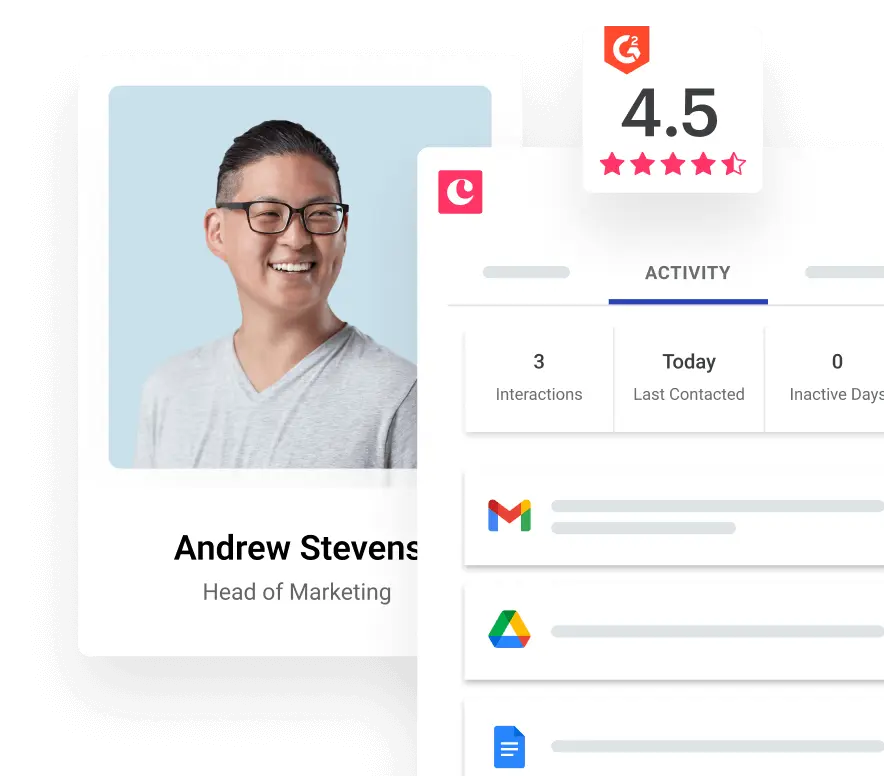
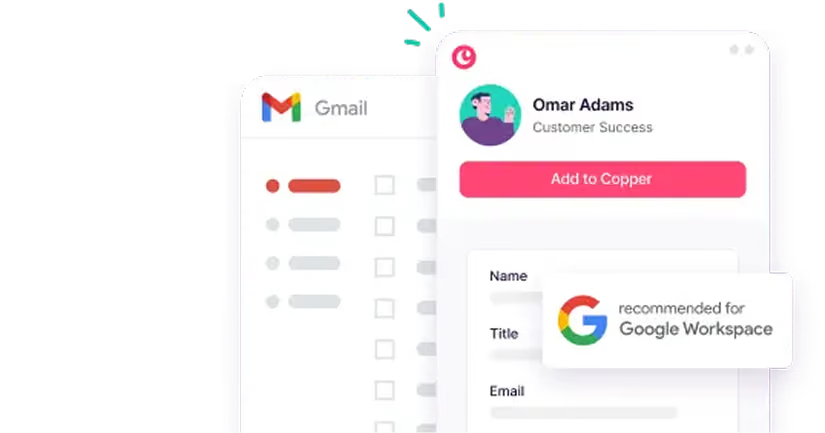
Instead of asking you to open another tab every five minutes, Copper brings your CRM directly into Gmail, Google Calendar, and Google Drive. Your emails, meetings, files, and customer information all stay connected automatically, so you're spending less time updating your CRM and more time actually talking to customers. Revolutionary concept, honestly.
Where Copper really shines is CRM customization. You can build custom pipelines for everything from lead management to onboarding, project delivery, and renewals, so your CRM reflects how your business actually works instead of forcing you into someone else's process. Add custom fields, automate repetitive tasks, and manage your entire customer lifecycle without writing a single line of code.
If your business relies on strong contact management and collaborative pipeline management, it's hard to beat a CRM that already lives inside the tools your team uses every day.
Key customization features
- Custom opportunity and project pipelines
- Custom fields for client information
- No-code workflow automations
- Chrome extension for Gmail, Google Calendar, and LinkedIn
Integrations: Native integrations with Gmail, Google Calendar, Google Drive, and Google Sheets. Copper is also the only CRM that's a Recommended for Google Workspace app.
Pricing: Plans range from Starter to Business, with a 14-day free trial.
Considerations: If your company runs on Microsoft 365 or Outlook instead of Google Workspace, you'll probably want to look elsewhere. Copper is unapologetically built for Google's ecosystem. (And honestly? That's part of what makes it so good.)
2. HubSpot
Best for: Businesses looking for a free CRM they can grow into
If you've researched CRMs for more than five minutes, you've probably come across HubSpot. (Honestly, it'd be weirder if you hadn't.)
Its free plan is one of the biggest reasons it's so popular. You get enough features to organize your contacts, manage leads, and start building out your sales process without pulling out the company credit card. As your business grows, so do the customization options. You can create custom properties, build your own pipelines, automate repetitive tasks, and even layer on email marketing if you want everything under one roof.
Just know that a lot of the really exciting features live behind the paid plans. It's easy to get comfortable with the free version, then realize the one feature you actually want requires an upgrade. (Convenient for them.)
Key customization features
- Custom properties
- Configurable pipelines
- Reporting dashboards
- Advanced workflow automation
- Built-in email marketing
Integrations: Thousands of third-party apps through HubSpot's marketplace.
Considerations: Great for growing businesses, but costs can climb quickly as you unlock more advanced CRM customization.
3. Pipedrive
Best for: Sales teams that love a visual pipeline
Some people organize their lives with colour-coded spreadsheets. Others do it with sticky notes.
Pipedrive people? They love a pipeline.
Everything about the platform is built around helping sales teams move deals from one stage to the next. Its drag-and-drop interface makes pipeline management feel incredibly intuitive, and creating custom pipelines is refreshingly simple. If your biggest priority is lead management, it's easy to see why so many sales teams swear by it.
Where things get a little trickier is after someone becomes a customer. If your business spends just as much time on onboarding, delivery, or renewals as it does closing deals, you'll probably want another tool to pick up where Pipedrive leaves off.
Key customization features
- Drag-and-drop custom pipelines
- Custom fields
- Activity tracking
- Sales automation
Integrations: Connects with hundreds of business tools through its marketplace.
Considerations: Excellent for sales and lead management, but less robust for post-sale customer workflows.
4. Zoho CRM
Best for: Businesses that want maximum flexibility without a massive price tag
Zoho CRM is kind of like the Swiss Army knife of this list. There is a tool for... pretty much everything.
If you're looking for deep CRM customization, it's hard not to be impressed. Between custom modules, workflow rules, layouts, and the Canvas design studio, you can make the platform feel surprisingly tailored to your business.
The trade-off? There's a lot to learn.
If you're the kind of person who gets excited about tweaking workflows and optimizing dashboards, you'll probably have a great time. If you just wanted to import your contacts and move on with your day... maybe set aside an afternoon. (Or two.)
Key customization features
- Canvas design studio
- Custom modules
- Workflow automation
- Flexible layouts
Integrations: Works seamlessly with the wider Zoho ecosystem and hundreds of third-party apps.
Considerations: One of the most customizable CRMs available, but expect a steeper learning curve than most.
5. monday CRM
Best for: Teams that juggle customers and projects
If you've ever used monday.com, you'll know exactly what you're getting here. Bright colours. Flexible boards. The overwhelming urge to organize absolutely everything.
monday CRM takes that same experience and applies it to sales, contact management, and customer relationships. You can build workflows around the way your team operates, customize boards for different departments, and automate repetitive tasks without needing a developer every five minutes.
It's especially useful if your work doesn't stop after someone signs a contract. Agencies, consultants, and service businesses that manage projects alongside customers will probably feel right at home.
Key customization features
- Custom boards
- Workflow automations
- Dashboards
- Multiple views
Integrations: Google Workspace, Slack, Microsoft Teams, Zoom, and hundreds more.
Considerations: Great if project management is part of your customer journey. If you're looking for an extremely sales-focused CRM, there are stronger options.
6. Streak
Best for: Freelancers and small teams who practically live in Gmail
You know that person who refuses to leave their inbox?
Streak was built for them.
Instead of asking you to log into a separate CRM, Streak turns Gmail into one. You can manage contacts, move deals through custom pipelines, collaborate with teammates, and track conversations without ever opening another tab. (Which, if your browser already has 37 tabs open, feels like a public service.)
Its simplicity is exactly what makes it so appealing.
That said, simplicity has its limits. As your team grows and your sales process becomes more complex, you may eventually outgrow what Streak can do.
Key customization features
- Gmail-native pipelines
- Custom fields
- Mail merge
- Email tracking
Integrations: Built directly into Gmail.
Considerations: Fantastic for solo businesses and small teams, but less suited for complex lead management or larger organizations.
7. Close
Best for: Outbound sales teams
If your team spends most of the day making calls, sending emails, and chasing follow-ups, Close was built with you in mind.
Everything is designed to help sales reps move faster. Calling, SMS, email, pipeline management, and activity tracking all happen in one place, making it easy to keep outreach moving without constantly jumping between tools.
It's laser-focused on helping teams generate and close new business. If your priority is managing customer relationships after the sale, though, you'll probably want software with stronger project management or customer success capabilities.
Key customization features
- Custom fields
- Pipeline customization
- Built-in calling and SMS
- Sales reporting
Integrations: Email, calendars, and third-party apps through integrations.
Considerations: Excellent for outbound sales. Less ideal if your business needs robust post-sale workflows.
How to choose the right customizable CRM
If you're hoping there's one clear winner... sorry. (I wish it were that easy.)
The best CRM is the one that fits your business, not the one with the longest feature list.
Before you commit, ask yourself a few questions.
Where does your team actually spend its time? If everyone practically lives in Gmail and Google Calendar, choosing a CRM with native Google Workspace integrations will make life a whole lot easier. The less time your team spends switching between apps, the more likely they are to actually keep the CRM updated. Funny how that works.
What does your customer journey look like? Some platforms are brilliant for lead management but stop being useful once a deal is won. Others support the entire customer lifecycle, from the first conversation to onboarding, delivery, renewals, and beyond. Think about where your team spends the most time before making a decision.
How much CRM customization do you actually need? Every business needs custom fields and custom pipelines, but not every business needs to rebuild an entire CRM from scratch. Focus on finding a platform that gives you flexibility without adding unnecessary complexity.
Will your CRM grow with you? The goal isn't just solving today's problems. It's choosing software that still works after you've hired five more people, launched a new service, or doubled your customer base. Because if you're switching CRMs every two years... something has gone very wrong.
Build a CRM that grows with your team
The best customizable CRM isn't the one with the flashiest dashboard or the longest list of features.
It's the one your team actually enjoys using.
Because here's the thing nobody tells you about CRMs: the fanciest automation in the world doesn't matter if no one updates their contacts. The prettiest reports aren't very helpful if half your customer information lives in someone's notebook. (Or worse, their memory.)
Whether your priority is better lead management, smarter contact management, more flexible pipeline management, or deeper CRM customization, the right platform should make work feel easier, not give you another system to manage.
If your business already runs on Google Workspace, Copper is built to do exactly that. It combines powerful customization with native Gmail, Google Calendar, and Google Drive integrations, so your CRM works where your team already works. Less tab switching. Less duplicate data entry. More time building relationships with customers.
And if you're ready for a CRM that adapts to your business instead of forcing your business to adapt to it, try Copper free for 14 days. See how much easier customer relationship management can be when everything lives inside Google Workspace. No credit card required.