










You know every client's name, their kids' names, the deal that almost fell apart in 2019, and exactly why Thompson always wants his invoice sent on a Friday. None of that lives in a system. It lives in your head, a few notebooks, and a spreadsheet you've been meaning to clean up since 2015.
That's not disorganization. That's decades of trust, built one relationship at a time. But it becomes a real problem the moment you start thinking about what comes next, whether that's retiring, selling, or handing the business to your kid or a longtime employee.
The real risk isn't the mess. It's what happens when you're not there to explain it.
Here's the part most owners don't think about until it's urgent: a business built on relationships is only as transferable as those relationships are documented.
If a buyer, a successor, or even a family member asked to see your client history today, could you hand them anything beyond your own memory? For most owners in your position, the honest answer is no. And that's not a character flaw. It's just what happens when you've been the entire system for 20, 30, or 40 years.
The trouble is that buyers pay less for businesses where all the relationship knowledge walks out the door with the owner. And successors inherit months of stress trying to reconstruct what you already know by heart.
Meet Ray Delgado, who's been doing this for 28 years
Delgado runs a commercial insurance agency outside Columbus. He knows which of his 200 active accounts are loyal for life and which ones are one bad renewal away from leaving. He knows because he's had lunch with most of them. Twice.
None of that is written down anywhere. It's in his head, a stack of manila folders, and a Google Sheet his niece set up for him years ago that he half-updates.
Delgado is 61. He'd like to sell in the next three years. Every time his accountant brings up "documenting the client base," he changes the subject, because the idea of learning some complicated new software at this stage feels harder than just working another five years.
If any of that sounds familiar, this guide is for you.
Why so many business owners run this way (and it's not a knock on you)
Spreadsheets, notebooks, and memory work when you're the only one who needs to understand your own system. They're flexible, they're free, and they don't ask you to learn anything new.
Most CRM software wasn't built with you in mind, either. It was built for sales teams with managers, dashboards, and a whole department to justify the learning curve. For one person running a business on relationships, that's a lot of software to buy for a problem that's really just: I need my client history somewhere safer than my own head. It's a myth that you're "too small" for a CRM, but it's an understandable one, given what most CRM software actually looks like.
Three questions that tell you if it's time to get organized
Ask yourself:
- Could someone else run your book of business for a month if you got sick tomorrow?
- Do you know, without stopping to think, which of your accounts are quietly at risk of leaving once you're gone?
- If a buyer or successor asked to see your client history today, would you be showing them a system, or just your memory?
If you hesitated on more than one, it's worth spending twenty minutes on what follows.
A five-step guide to making your business easy to hand off
You don't need to overhaul everything overnight. Here's the order that actually works.
1. Start with a relationship audit, not a data-entry project. Don't try to digitize every contact you've ever emailed. Start with the twenty to thirty relationships that actually matter: your best accounts, your referral sources, the vendors who'd notice if you disappeared. That's your real business. Everything else can wait.
2. Keep everything in the tools you already use every day. The biggest reason owners avoid this step for years is the fear of learning a whole new platform. You don't have to. If you already live in Gmail, Calendar, and Drive, look for a CRM that works inside Google Workspace instead of asking you to switch tabs and relearn your day.
3. Bring what you have. Don't start from zero. Whatever you're using now, a spreadsheet, a Google Sheet, an exported contact list, should come with you, not get abandoned. Moving your client data over from Excel or Sheets should take an afternoon, not a month, and it shouldn't require retyping a single row.
4. Write down the why, not just the who. A name and email address won't help a successor understand why an account matters. The context does: how long you've worked together, what they care about, what almost went wrong once. A few notes attached to each contact turn your memory into something someone else can actually use.
5. Test the handoff before you actually need one. Ask a family member, an assistant, or whoever might eventually take over to spend a week finding information in your new system without you narrating it. If they can't, that's useful to know now, not during a sale.
What this is actually worth when you sell or hand things off
Documented client relationships aren't just tidier. They're worth real money. A business where the relationships live in a system, not just in the owner's head, is easier to value, easier to get through due diligence, and far less risky for a buyer to take on. It's also a kinder thing to leave your family or your team: a clear picture instead of a scramble.
If you can send an email, you already have what this takes
This is usually the part where owners quietly close the tab, because the idea of becoming a "software person" this late in the game doesn't sound appealing.
Here's the reassurance: if you've ever sent an email, attached a file, or found something in Drive, you already have every skill this requires. The goal isn't to run a complicated system. It's to get your relationships out of your head and into something durable, using tools that already feel familiar, because in the best version of this, that's exactly what they are.
How Copper fits into this
We built Copper because relationships like yours, the kind built over decades of showing up for people, deserve better than a spreadsheet that only makes sense to you.
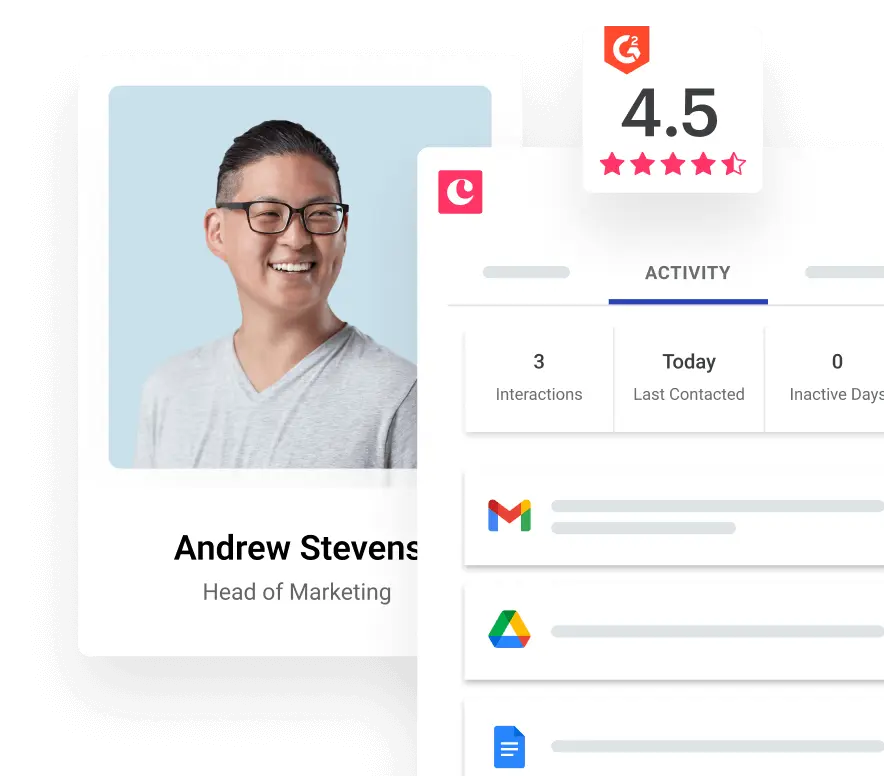
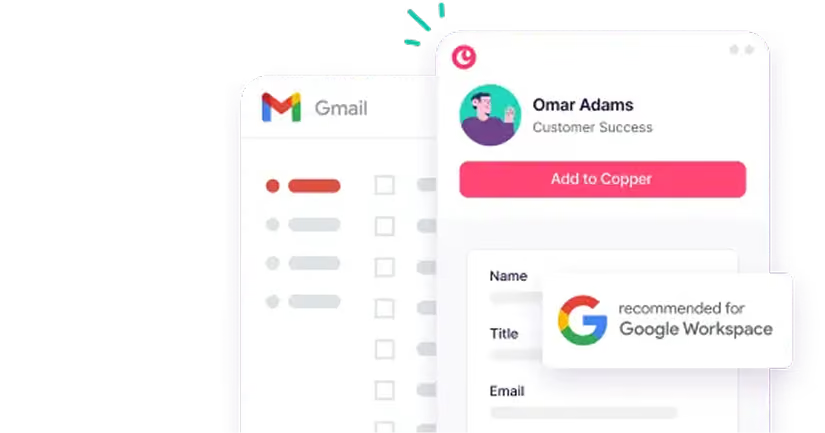
Copper lives right inside Gmail, Calendar, and Drive, so there's no new platform to learn and no tabs to switch between. If you're already comfortable checking your email, you already know most of what you need to use it. And because it's the only CRM recommended for Google Workspace, it's built to fit into your day, not rebuild it.
Bringing your existing spreadsheet in takes minutes, not weeks. You can import directly from a Google Sheet or a CSV export, and nothing you've already built gets thrown away. It just finally has a home that someone else can walk into.
That's the part that matters most for where you're headed. Whether you're selling in three years or handing the keys to your daughter next spring, the goal is the same: make sure the relationships that built your business can outlast you being the only one who understands them.
Ready to see what your client list looks like organized? Try Copper free for 14 days. No credit card, no steep learning curve, and your spreadsheet comes with you.