










Most CRMs promise flexibility, but then you open them up and find pipeline stages that don't match your process, fields you'll never use, and reports that answer questions nobody asked. You end up working around the tool instead of with it.
A customizable CRM flips that dynamic. It's software you shape to fit how your team actually operates, your data, your workflow, your client journey. This guide walks through what customization looks like in practice, how to approach it step by step, and which platforms give you the flexibility to make it happen.
Key takeaways
- A customizable CRM allows teams to configure fields, pipeline stages, workflows, and integrations to match their actual processes without requiring developers or custom-built software.
- Signs you need CRM customization include tracking data in spreadsheets, pipeline stages that don't match your sales process, and team members avoiding the tool because it creates extra work.
- Customization improves data quality, with 76% of CRM users reporting inaccurate data when fields don't match what teams actually track.
- Start CRM customization simply by mapping your current workflow, adding only fields you'll use, and iterating based on team feedback rather than overcomplicating it on day one.
What is a customizable CRM?
A customizable CRM is a customer management system built specifically for your unique business workflows, data structures, and team roles. Rather than forcing your process into a rigid template, you shape the software around how your team actually operates.
This distinction matters more than it might seem at first. Every business handles client relationships differently. A marketing agency tracking campaign briefs has different priorities than a consulting firm managing retainer clients. A customizable CRM lets you reflect those differences in the tool itself.
Here's what you can typically adjust:
- Custom fields: Add data points that matter to your business, like project type, referral source, or contract value.
- Pipeline stages: Create stages that match your actual sales or delivery process.
- Workflow automation: Set up triggers for reminders, task creation, and notifications based on your own rules.
- Integrations: Connect the CRM to tools you already use, like email, calendar, or billing software.
Customizable CRM vs custom-built CRM
The terms sound similar, but they describe very different approaches. A customizable CRM is an existing platform you configure through settings and options. A custom-built CRM is coded from scratch by developers to meet highly specific requirements.
For most small and mid-sized teams, a customizable CRM makes more sense. Custom-built systems require significant upfront investment, months of development, and ongoing technical maintenance. Unless your business has truly unique requirements that no existing platform can handle, a flexible off-the-shelf option will likely serve you well.
| Factor | Customizable CRM | Custom-built CRM |
|---|---|---|
| Setup time | Hours to days | Months |
| Cost | Monthly subscription | High upfront development |
| Technical skill | No-code, admin-level | Developers required |
| Best for | Small to mid-sized teams | Large enterprises with unique needs |
Signs your team needs to customize your CRM
Sometimes the friction is obvious. Other times it builds slowly through workarounds and side systems. Here are a few signals that your current setup isn't quite working:
- Your pipeline stages don't match how deals actually move through your process.
- You're tracking important information in spreadsheets because the CRM doesn't have the right fields.
- Team members skip the CRM because the user experience feels like extra work rather than a helpful tool.
- You can't pull reports that answer the questions you actually have.
- Follow-ups slip through the cracks because there's no automation to catch them.
If any of that sounds familiar, it's probably time to rethink your configuration.
Why customizing your CRM pays off for small teams
The benefits of customization show up in day-to-day work, not just in theory. Here's what changes when your CRM actually fits how your team operates.
Your data stays cleaner and more useful
When fields match what your team actually tracks, people fill them in. You end up with less garbage data and more reliable reporting, critical given 76% of CRM users report inaccurate data.
Your pipeline reflects how you actually sell
Deals move through stages that mirror your real process. Sales forecasting starts to make sense because the numbers reflect reality, not some generic template.
Fewer tasks slip through the cracks
Automations handle follow-up reminders and status updates. Nothing gets forgotten just because someone got busy with another project.
Reports answer questions you actually ask
Custom dashboards show metrics your team cares about. You're not stuck with default charts that no one looks at.
Handoffs from sales to delivery get smoother
A smooth sales-to-delivery handoff gives project teams context from day one. This is especially valuable for professional services firms where the relationship doesn't end at the sale.
Here’s what you can actually customize in most CRMs
Let's get specific about what "customizable" means in practice. Most modern CRMs offer configuration options that don't require any code.
Add custom fields and data types
You can add fields for data your business tracks. Think project type, contract value, referral source, or industry vertical. Custom fields replace the side spreadsheets where important details often get lost.
Track deals with custom pipeline stages
Rename or add stages to match your sales process. An agency might add "Proposal Sent" and "Scope Approved" stages. A consulting firm might include "Discovery Call Scheduled" and "SOW Under Review." The point is to mirror what actually happens.
Jeni's Splendid Ice Creams is a great real-world example of this in action. Their wholesale team needed pipeline stages that reflected their actual vetting and onboarding process, not a generic sales funnel. After switching to Copper (their previous CRM "wasn't being updated, nobody was able to search for information easily, and it just wasn't user-friendly"), they built out a setup they could quickly customize to fit their business model.
That meant tracking which SKUs each retail customer carries, what each customer is paying, and how to categorize different customer types, all at the record level. Jillian Woltz, who manages the wholesale team, put it simply: "We can actually see which stage everything is in, whether we have their paperwork and we're vetting them, or if we've closed the deal and we're just setting them up in our system. Copper just makes it easier for us to stay on track."
The results were concrete. For smaller mom-and-pop accounts, the team can now close everything within a week, including the vetting process. For larger distributor deals that can take months, having all the information in one place still meaningfully sped things up.
Automate workflows with triggers
Set rules like "when a deal moves to Closed Won, create a project and notify the delivery team." With reps losing hours a week to manual data entry, automations reduce manual busywork and help ensure consistent follow-through.
Build dashboards and custom reports
Build custom reports and views that show what matters to your team. Pipeline value by stage, deals closing this month, activity by team member. You decide what's worth tracking.
Connect your existing tools
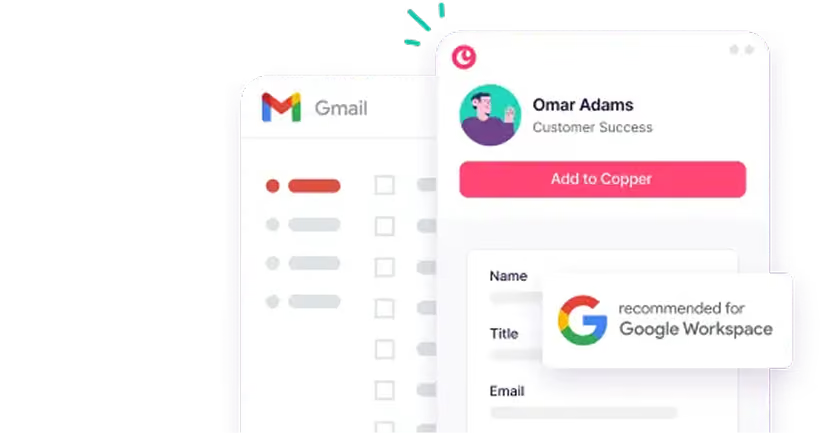
Connect your CRM to email, calendar, billing, or project management tools. Some CRMs, like Copper, integrate directly with Google Workspace, so you can manage contacts and deals without switching tabs.
Control user permissions and access
Control who sees what. Partners might see everything while associates see only their own deals. This matters for client confidentiality and keeping interfaces uncluttered.
How to customize your CRM step by step
Customization doesn't require a developer for most platforms. Here's a practical process to follow.
1. Map out how your team actually works today
Before touching any settings, document your current process. How do leads come in? How do deals progress? What happens after you close? This step prevents you from copying someone else's workflow that doesn't fit your reality.
2. Define the data you want to track
List the fields you want beyond defaults. Only add what you'll actually use. Every extra field creates friction for the person entering data.
3. Build pipeline stages that match your process
Create stages for each meaningful milestone in your sales or client journey. Avoid too many stages. Simplicity helps adoption.
4. Set up automations for repetitive tasks
Start with high-impact workflow automations: follow-up reminders, task creation when deals move, notifications to team members. You can add more over time as you learn what's useful.
5. Create dashboards for visibility
Build one dashboard for pipeline health, one for team activity. Customize reports you'll actually review weekly.
6. Roll out to your team and refine as you go
Train your team, gather feedback, and adjust. CRM customization is iterative. You don't have to get it perfect on day one.
Watch out for these common CRM customization mistakes
A few pitfalls come up repeatedly. Here's what to watch for:
- Over-customizing on day one: Start simple and add complexity as you learn what you actually want.
- Creating too many required fields: If it's a chore to log a contact, people won't do it.
- Copying another company's setup: Your process is yours. Customize for how you work, not how someone else works.
- Ignoring user feedback: The people using the CRM daily will spot friction you won't.
- Skipping training: Customization only works if your team knows how to use it.
Customizable CRM software worth considering
Here's a quick look at options that offer strong customization for small and growing teams.
Copper
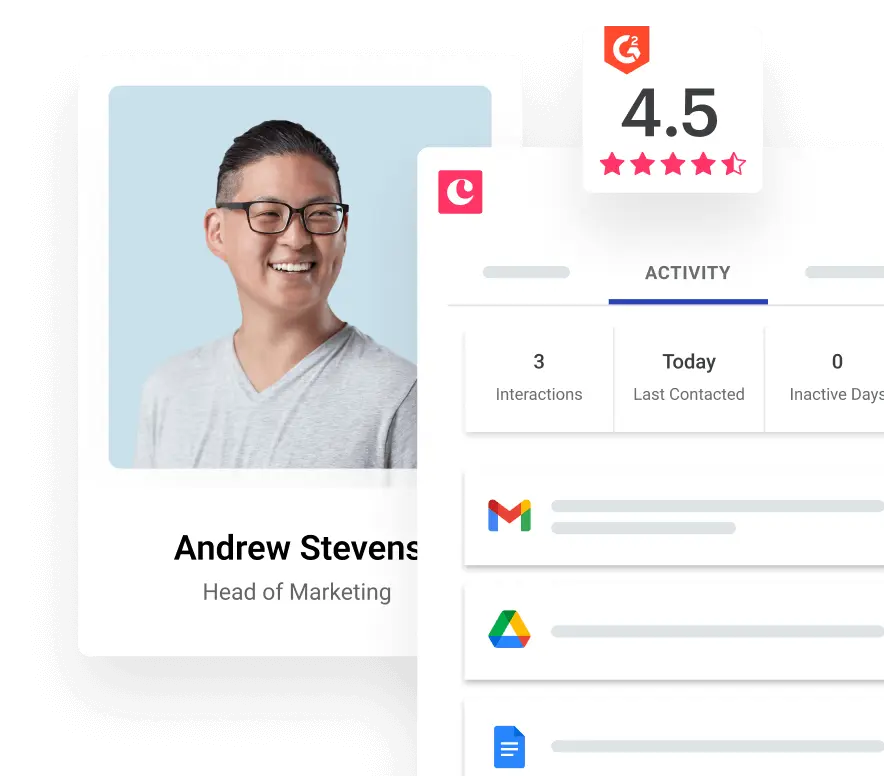
Built for Google Workspace users, Copper appears directly in Gmail, Calendar, and Drive. It's particularly strong for professional services teams managing client relationships and projects. Pipelines, fields, and automations are all configurable without code. Everything stays connected to the tools you already use.
HubSpot
HubSpot offers a popular free tier with solid customization options. It's better suited for marketing-heavy teams, though it can get complex and expensive as you scale.
Pipedrive
Pipedrive is sales-focused with visual pipeline customization. It works well for teams that prioritize deal tracking over project management.
Zoho CRM
Zoho offers deep customization options, especially for teams already using other Zoho products. The learning curve can be steep.
Monday CRM
Monday is highly visual and flexible. It works well for teams that want CRM and project management in one place.
How to customize your CRM without leaving Google Workspace
Most CRMs require constant tab-switching and 42% of sales reps feel overwhelmed by too many tools. Think about what that looks like day to day: open Gmail, then open the CRM, then copy information between them by hand. Copper takes a different approach by living inside Gmail and Google Calendar. This makes customization more practical because your fields and pipelines update without leaving your inbox. You're not maintaining two separate systems.
- Add contacts from Gmail: No copy-pasting into a separate system.
- Track conversations automatically: Emails sync without manual logging.
- Access your pipeline from your inbox: See deal stages without switching tabs.
- Export data to Google Sheets: Build custom reports using tools you already know.
If your team runs on Google Workspace, this integration removes a lot of the friction that makes CRM adoption difficult in the first place. Try Copper for 14 days free