











A client just signed. Everyone celebrates for about five minutes. Then the questions start: "Who's sending the welcome email?" or "Did anyone book the kickoff call?"
Suddenly, someone's digging through an old Google Drive folder called New Client Onboarding FINAL_v4_FINAL, another person's creating tasks from memory, and your project manager finds out about the new client at the exact same time the client gets the welcome email.
Sound familiar? It’s not because your team is disorganized. It's because the way you're onboarding your agency's clients has outgrown the way your agency works.
When you're a small team, you can get away with onboarding clients through Slack messages, sticky notes, and whatever system happens to live in the founder's head.
But once you've got 15, 20, or 40 people? Every new client means more handoffs, more moving pieces, and more opportunities for something to fall through the cracks. The funny thing is, most mid-sized agencies don't lose momentum during the sales process. They lose it right after the contract's signed.
The good news? Almost all of it can be automated.
In this guide, we'll walk through how to build a client onboarding process for agencies that takes the repetitive work off your team's plate. You'll see where automation fits, which steps are worth streamlining, and how a customer relationship management (CRM) platform like Copper helps keep sales and delivery in sync from day one.
What is a client onboarding process for agencies?
A client onboarding process is everything that happens between "the contract is signed" and "we're officially working together."
That usually includes:
- Sending a welcome email
- Collecting intake information
- Assigning internal tasks
- Scheduling the kickoff call
- Handing the client from sales to the delivery team
And while onboarding might feel like an internal process, your clients absolutely notice it.
Those first couple of weeks set the tone for your entire relationship. If everything feels organized, responsive, and easy, clients feel confident they've made the right choice. If they're chasing updates before the project's even started, that confidence disappears fast.
That's why good onboarding isn't really about organization. It's about building trust before you've delivered a single piece of work.
Why agency client onboarding gets harder as you grow
Here's the thing: agencies don't really have a traditional sales handoff. You're handing off a relationship.
The person who spent weeks building trust and closing the deal isn't always the same person who's going to manage the account. That means every detail about the client (their goals, concerns, expectations, communication style) needs to make it to the next person without anything getting lost along the way.
That's easy when you're a team of five. It's much harder when you've got strategists, account managers, project managers, creatives, and specialists all touching the same client.
That's why mid-sized agencies tend to feel onboarding pain the most. You're too big to keep everything in your head, but not quite big enough to have a dedicated onboarding team keeping everything moving.
A few things usually start happening around this stage:
- Every client needs something slightly different, but everyone follows the same generic checklist.
- Sales closes the deal, delivery picks it up, and important context gets lost in the handoff.
- The same welcome emails, folders, tasks, and documents get recreated over and over again for every new client.
- Someone has to remember what happens next, who owns it, and when it needs to happen.
None of this happens because your team isn't good at what they do. It happens because the process has outgrown the "we'll remember to do it" stage.
How to automate your agency’s onboarding process
As your agency grows, onboarding shouldn't depend on someone remembering what happens next. Automate the repeatable parts, like welcome emails, task assignments, project creation, internal notifications, and follow-ups, so your team can focus on the parts that actually require a human.
This is where having the right CRM makes a big difference. With Copper, the client context you've already collected during the sales process stays with the relationship, and you can use it to trigger the next steps automatically when a deal closes.
Before you automate, map out what actually needs to happen
Automation works best when the process behind it is already clear (otherwise, you're just making a messy process happen faster).
Before building any workflows, map out what should happen from the moment a deal closes to the moment the client is fully handed over to your delivery team.
For each step, answer three things:
- What needs to happen? Maybe it's sending an intake form, creating a project, or preparing a kickoff deck.
- Who owns it? Every step should have a clear owner, even if the task itself is automated.
- What triggers it? A signed contract? A deal moving to Closed Won? The client completing their intake form?
Then look for the steps your team repeats every single time. Those are usually your best candidates for automation.
The goal isn't to build one giant workflow that treats every client exactly the same. Your enterprise retainer probably shouldn't have the same onboarding process as a three-month project.
So, build a consistent foundation, then leave room for the parts that genuinely need to change based on the client, service, or scope.
Once you know what should happen, who owns it, and what kicks it off, you can start taking the manual work out of the process.
What to automate in your client onboarding process
Start with the repetitive steps that happen for almost every new client:
- Sending a personalized welcome email
- Creating a project or client record
- Assigning tasks and owners
- Notifying the delivery team
- Scheduling reminders and follow-ups
- Creating folders and documents
Here's how you can automate some of those steps in Copper.
Send a welcome email and create a project the second a deal closes
In Copper, moving an opportunity to Closed Won can automatically kick off the rest of your onboarding workflow with email automation.
Your client can get a welcome email personalized with their name, project, and account manager without someone having to remember to hit send. At the same time, Copper can help you create a linked Project Pipeline record for your delivery team, so the people taking over the relationship have a clear place to pick up where sales left off.
Have an onboarding form instead of an email chase
If you've ever spent two weeks chasing brand assets, logins, billing details, or project goals through a never-ending email thread, you're not alone.
It's also completely avoidable.
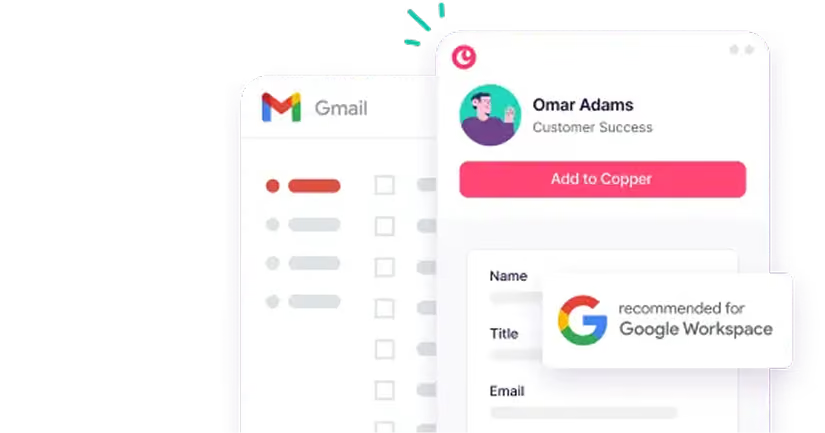
Send an onboarding form as soon as the deal closes. The client fills it out once, and their responses automatically populate their record inside Copper. Your strategist isn't digging through Gmail looking for a logo someone sent eight days ago, and nobody's copying information from one tool into another.
Create tasks that assign themselves
Project managers already have enough to keep track of. They shouldn't also be responsible for remembering every single onboarding task. Once a client moves into the onboarding stage, Copper can automatically create tasks like:
- Build the kickoff deck
- Schedule the kickoff meeting
- Request client assets
- Loop in the strategist
- Introduce the delivery team
Each task goes to the right person with a due date already attached. Nobody has to ask what comes next, because the system already knows. That's the difference between having a checklist and having a workflow.
One place for contracts, assets, and notes
Every agency has been here: someone needs the client's signed contract, or the latest logo, or the original brand guidelines, or the kickoff notes from six months ago. Now everyone's searching Gmail, Google Drive, private Slack channels, and maybe even asking in the company group chat.
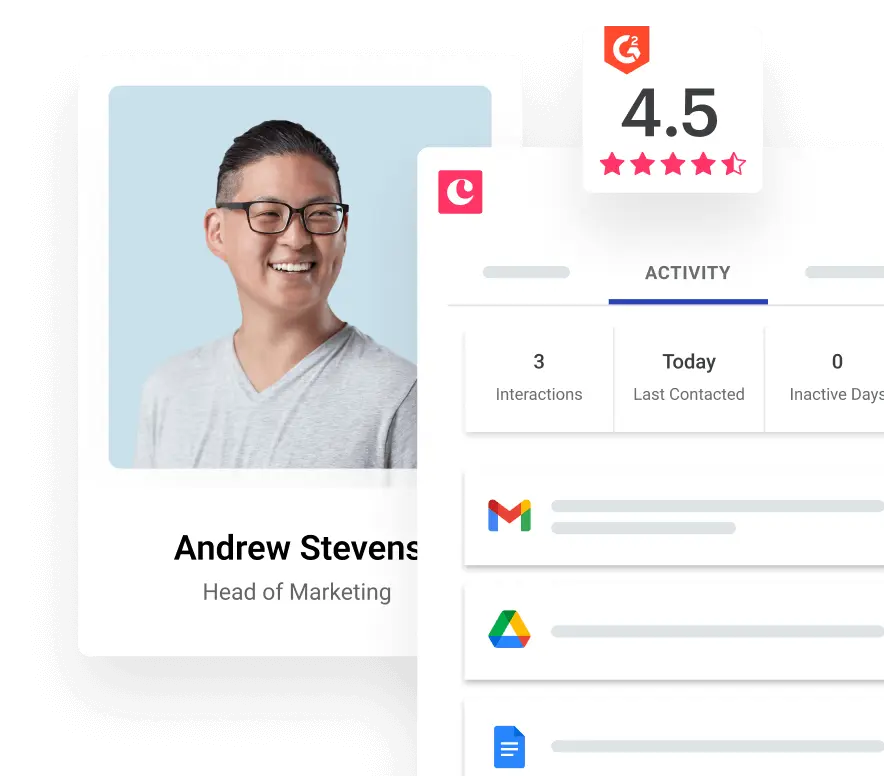
With Copper's Google Drive integration, contracts, assets, intake forms, and project files all stay connected to the client's record from day one. So when someone joins the account six months later, everything they need is already there.
A flag before onboarding quietly stalls
Even with a great process, things happen. A contract doesn't get signed, an intake form sits unfinished, or a kickoff call gets rescheduled three times. Without visibility, those clients quietly fall off everyone's radar. Copper’s AI Pipeline Flags surface deals that have stalled so your team can step in before momentum disappears completely. Instead of realizing two weeks later that onboarding never moved forward, you'll know exactly which clients need attention, and when.
Your agency client onboarding checklist
If you're building (or rebuilding) your onboarding process, here's a simple checklist to start with. You don't need to automate everything overnight. Start with the biggest time drains first, then build from there.
Once a deal closes, this should happen without anyone lifting a finger:
- Welcome email sends automatically
- Client receives an onboarding form instead of a long email thread
- Project record is automatically created and linked to the deal
- Internal onboarding tasks are assigned with owners and due dates
- Kickoff meeting gets scheduled and confirmed automatically
And no matter where a client is in the process, this should always be true:
- Contracts, assets, and notes are stored in one place
- Stalled onboarding is flagged before anyone falls through the cracks
One exercise that's worth doing? Pull up the last three clients your agency onboarded. Count how many of those were still done manually. Now estimate how long each one took.
It's probably only a few minutes here, ten minutes there, maybe half an hour waiting for information or chasing someone down. But multiply that across every new client you bring on, and suddenly you're talking about hours of admin every single month.
That's the real value of automation. It isn't one huge time saver. It's a dozen tiny manual tasks quietly disappearing.
Turn onboarding into a competitive advantage
A great client onboarding process isn't another checklist your team forgets to open. It's a system that works in the background, keeping everyone aligned while your team focuses on what clients actually hired you to do.
When your welcome emails are sent automatically, tasks are assigned without anyone thinking twice, and every file lives in one place, onboarding stops feeling like a scramble. Instead, every new client gets the same smooth, organized experience from day one.
If your agency has grown and is continuing to do so, that's the difference between constantly reinventing your process and having one that's built to scale.
Ready to spend less time on manual busywork and more time delivering great work? See how Copper can help you automate your client onboarding process so every new client gets the same smooth start. Try it free for 14 days.